Tuesday, October 04, 2005

Buried Beauties Vol. III - Paula Cale

I never actually watched Providence, a family drama that ran on NBC for several years in the late 90s/early 00's. But whenever I caught bits of an episode, or promos, I was always struck by the beauty of, not series lead Melina Kanakaredes (currently starring on CBS' CSI: New York), but by her cute younger sister, Joanie, played by Paula Cale. I've never seen Cale in anything else, and don't know how her career is going, but thought she had a very specific cuteness that rarely gets TV exposure. The pics below don't do her justice; she's one of those faces that looks better in video than in stills (Sarah Jessica Parker is another).


Until Whenever

Monday, October 03, 2005

Wilson Dead

I'm not sure what most "pop culture" fans would make of that title, which "Wilson" they would assume had died. Owen? Luke? The Wilson in question is neither, of course, but instead the playwright August Wilson. Wilson died yesterday, and only disclosed the liver cancer that was the cause of death in August. At only 60, Wilson's death is indeed a shock--one imagines that he had a lot of writing left in him.

Many would argue that Wilson will, if he hasn't already, join the very short list of true world-class American playwrights whose work will endure for generations: Eugene O'Neill, Arthur Miller, Tennessee Williams, Edward Albee, and, I'd argue, Stephen Sondheim. That Wilson belongs in such rarefied company can be argued, I suppose, but I suspect that that ultimate arbiter, time, will put him right there on that theatrical American Mount Rushmore.

Wilson's enduring legacy will be what he spent most of his career working on: a 10-play cycle chronicling the African-American legacy in America in the 20th century, one play per decade. The final play, Radio Golf, only premiered this year. I've seen productions, excellent productions put on by Rutgers University's Mason Gross School of the Arts, of only two Wilson plays, The Piano Lesson and Joe Turner's Come and Gone and they were wonderful in their judicious use of poetry, story-telling, myth-making, music, and theatricality to tell larger-than-life stories about working-class and poor blacks in Pittsburgh. That I haven't seen others is one of those deficiencies in the total sum of the art I've taken in that I really need to rectify. I have read a few of the other plays, and am eagerly awaiting the inevitable single volume collecting all 10 plays in one book. That will be a reading experience worth cherishing.

Until Whenever

Sunday, October 02, 2005

Forev-ER?

The "received" wisdom concerning that warhorse of television medical dramas, ER, seems to be that the show has far outlived its usefulness and should really be ended (or should have been ended several years ago). For just one example of this stance, see Jaquandor's recent post, or ny number of critics who echo many of his points and join him in calling for a mercy killing to their once-beloved show. The common complaints are that the storylines are tired, the characters uninteresting, and the series overall pretty much just plain worn out. So ende it now, go the complainers, end it now while we can still remember the show we loved with fondness. To this, I say feh.

Yes; I will out myself with rainbow-blazing pride: I still like ER--and not just like, but consider to be an excellent, if not earth-shatteringly brilliant, television drama. As for the common complaints, well:

1) Sure, an argument could be made that the show has, in its 10+ years, dealt with pretty much every kind of illness and injury in pretty much every permutation possible. Any mathematician worth his or her salt, though, will tell you that that's simply not true. The possibilities are near-enough to endless to be just that, considering the sheer range of diseases and injuries there are and how many different ways there are to combine them with each other and with different kinds of patients. They will, literally, never run out of permutations. That's just math.

But more importantly, each case still feels like its own, like its own organic set of problems and resolutions. A difficult pregnancy storyline may echo other, more fondly-remembered storylines, but each brings its own wrinkles. Many, Jaquandor included, took in last week's episode, which centered around a pregnancy in crisis, and immediately compared it, unfavorably, to the infamous "Dr. Greene loses a pregnant mother episode" from an early season. I'm always suspicious when you hear the refrain "it was better then." Memory has a way of coloring our experiences heavily; how many people insist that their favorite band's best work was done--how coincidentally--when they first got into them? But the fact is that this pregnancy storyline was very different, in the ethical dilemmas it subtly broached, in the nature of the medical crisis itself, in the way it ended, and, most importantly, in the characters, both on the doctors' side and the patients', themselves.

I still find, to varying degrees, of course, that each "medical" storyline the show brings up can stand on its own. All that being said, let me also put in a word for the nicely handled realism inherent in seeing certain types of cases crop up often. Working in a hospital, or at least I would imagine, can be repetitive like that, with the same problems and the same illnesses cropping up all the time. That the show after so many seasons is able to capture some of that is, to me, a strength, not a weakness.

2) I like the characters and find them and their stories interesting. There. It's really that simple. I like Pratt's combination of arrogance and heart, and how he's not simply a Eric La Salle rehash, even if that's how the rough outline may sound. I like that they've elevated Morris to be the new ass of the hospital and yet avoided just recreating Paul Crane's character. Sure, they're both roughly the villains, but alongside Romano's being an asshole was the notion that he was an excellent doctor. An ass, but a brilliant one. Morris is an ass who's not, at all, a good doctor. Sure, he's the new "jerk" but he's very different from the old one. I like the story of Luka and Sam; that the commitment-phobe Luka finally felt the burning desire to commit, only to have it be to a woman who wants very different things is, to me, interesting. I like that Sam is presented as not the angelic single-mother doing her best, but as a woman who loves her son with every fiber of her being and is still, in some ways, not a good mother. I like Neela's insecurity married with brilliance; the combination brings shadings to her character and allows for intriguing plotlines. I've loved Abby's transition from nurse to doctor, and how the show didn't play it up as such an obvious move--the value in being a nurse over a doctor was acknowledged and examined. I like Ray's cockiness and how it clashes with his hesitancy to commit to being a doctor first and foremost. Bottom line? I find these characters well-drawn, intriguingly flawed, and consistently written.

I also like that they keep coming and going. To me, ER, has the makings of a very long-term show (well, even longer-term than it has been already). That the drama could continue for, say, 20-25 years and end up being the long, epic, cast-of-thousands, story of one county hospital is to me very satisfying. To me, the constant call you hear for it to be cancelled has more to do with nostalgia than a clearheaded reaction to the show as it stands now. If ER had premiered a few weeks ago as a new show, with basically the same cast and stories as it has now, I doubt anyone would be complaining--my suspicion is that the praise would be high indeed. So, yes, I say let ER continue on, for how ever many years the audience will have it. For those who miss the old cast and their stories, the DVDs are waiting for you. Pop them in and enjoy. But for the rest of us, these new characters and stories carry their own very real pleasures.

Until Whenever

Friday, September 30, 2005

Doin' the Friday Shuffle

With one step.

1. "Looks like December" - Antonio Carlos Jobim - Antonio Carlos Jobim's Finest Hour
I love "Waters of March" with all my being, but this isn't doing it for me.

2. "Jeremiah Blues (Part 1)" -- Sting -- The Soul Cages
I love this song, a jazzy-bluesy hybrid with some great end-of-the-world lyrics.

3. "The Woman with the Alabaster Box" - Arvo Part - I am the True Vine
Part's music is just gorgeous, hushed and solemn but still full of life. The balance here between the men and women in the choir creates a nice kind of duality.

4. "Pickin' on Your baby" - Louis Armstrong - The Essential Louis Armstrong
Ancient, scratchy-sounding song with Louis on the trumpet and some warbly female singing the lead. For me, of primarily historical interest.

5. "Esmeralda" - Alan Menken and Tim Stephen Schwartz - Der Glockner Von Notre Dame
The Berlin Original Cast recording (sung in German) of the seemingly abandoned stage version of Disney's The Hunchback of Notre Dame. This is a new song written for the score that makes ample use of themes from the film. Stirring Broadway stuff.

6. "Puerto Rican Day Parade" - Paul Simon - The Capeman (Original Broadway Cast)
Authentic-sounding Puerto Rican music from Simon, in an upbeat, trumpet-filled number from his underrated Broadway score.

7. "Move On" - Beradette Peters - Sondheim, Etc.
Touching live rendition of one of her signature Sunday in the Park with George songs. The revised, more "Broadway" orchestration is a bit of a disappointment.

8. "The Juggernaut" - Andrew Lippa - The Wild Party (Original Cast Recording)
Very energetic big ensemble number from Lippa's play. Many scoffed at the anachronistic electric guitars, but I think they give the score a great sound.

9. "When I Was Cruel No. 2" - Elvis Costello - When I Was Cruel
Costello builds an insinuating, creepy song out of a sampled loop. He's still got it.

10. "Blood of Eden" - Peter Gabriel - Us
One of my favorite Gabriel songs, a simple, slow, delicate ballad with a great vocal.

Until Whenever
Ban the Meme!

From Lefty, I grab the following. The idea is to note those of the banned books listed you've read or own:

BOLD: Read
BOLD and Underline: Own and have read.

Scary Stories (Series) by Alvin Schwartz
Daddy?s Roommate by Michael Willhoite
I Know Why the Caged Bird Sings by Maya Angelou
The Chocolate War by Robert Cormier
The Adventures of Huckleberry Finn by Mark Twain
Of Mice and Men by John Steinbeck
Harry Potter (Series) by J.K. Rowling
Forever by Judy Blume
Bridge to Terabithia by Katherine Paterson
Alice (Series) by Phyllis Reynolds Naylor
Heather Has Two Mommies by Leslea Newman
My Brother Sam is Dead by James Lincoln Collier and Christopher Collier
The Catcher in the Rye by J.D. Salinger
The Giver by Lois Lowry
It?s Perfectly Normal by Robie Harris
Goosebumps (Series) by R.L. Stine
A Day No Pigs Would Die by Robert Newton Peck
The Color Purple by Alice Walker
Sex by Madonna
Earth?s Children (Series) by Jean M. Auel
The Great Gilly Hopkins by Katherine Paterson
A Wrinkle in Time by Madeleine L?Engle
Go Ask Alice by Anonymous
Fallen Angels by Walter Dean Myers
In the Night Kitchen by Maurice Sendak
The Stupids (Series) by Harry Allard
The Witches by Roald Dahl
The New Joy of Gay Sex by Charles Silverstein
Anastasia Krupnik (Series) by Lois Lowry
The Goats by Brock Cole
Kaffir Boy by Mark Mathabane
Blubber by Judy Blume
Killing Mr. Griffin by Lois Duncan
Halloween ABC by Eve Merriam
We All Fall Down by Robert Cormier
Final Exit by Derek Humphry
The Handmaid?s Tale by Margaret Atwood
Julie of the Wolves by Jean Craighead
George The Bluest Eye by Toni Morrison
What?s Happening to my Body? Book for Girls: A Growing-Up Guide for Parents & Daughters by Lynda Madaras
To Kill a Mockingbird by Harper Lee
Beloved by Toni Morrison
The Outsiders by S.E. Hinton
The Pigman by Paul Zindel
Bumps in the Night by Harry Allard
Deenie by Judy Blume
Flowers for Algernon by Daniel Keyes
Annie on my Mind by Nancy Garden
The Boy Who Lost His Face by Louis Sachar
Cross Your Fingers, Spit in Your Hat by Alvin Schwartz
A Light in the Attic by Shel Silverstein
Brave New World by Aldous Huxley
Sleeping Beauty Trilogy by A.N. Roquelaure (Anne Rice)
Asking About Sex and Growing Up by Joanna Cole
Cujo by Stephen King
James and the Giant Peach by Roald Dahl
The Anarchist Cookbook by William Powell
Boys and Sex by Wardell Pomeroy
Ordinary People by Judith Guest
American Psycho by Bret Easton Ellis
What?s Happening to my Body? Book for Boys: A Growing-Up Guide for Parents & Sons by Lynda Madaras
Are You There, God? It?s Me, Margaret by Judy Blume
Crazy Lady by Jane ConlyAthletic Shorts by Chris Crutcher
Fade by Robert Cormier
Guess What? by Mem Fox
The House of Spirits by Isabel Allende
The Face on the Milk Carton by Caroline Cooney
Slaughterhouse-Five by Kurt Vonnegut
Lord of the Flies by William Golding
Native Son by Richard Wright
Women on Top: How Real Life Has Changed Women?s Fantasies by Nancy Friday
Curses, Hexes and Spells by Daniel Cohen
Jack by A.M. Homes
Bless Me, Ultima by Rudolfo A. Anaya
Where Did I Come From? by Peter Mayle
Carrie by Stephen King
Tiger Eyes by Judy Blume
On My Honor by Marion Dane Bauer
Arizona Kid by Ron Koertge
Family Secrets by Norma Klein
Mommy Laid An Egg by Babette Cole
The Dead Zone by Stephen King
The Adventures of Tom Sawyer by Mark Twain
Song of Solomon by Toni Morrison
Always Running by Luis Rodriguez
Private Parts by Howard Stern
Where?s Waldo? by Martin Hanford
Summer of My German Soldier by Bette Greene
Little Black Sambo by Helen Bannerman
Pillars of the Earth by Ken Follett
Running Loose by Chris Crutcher
Sex Education by Jenny Davis
The Drowning of Stephen Jones by Bette Greene
Girls and Sex by Wardell Pomeroy
How to Eat Fried Worms by Thomas Rockwell
View from the Cherry Tree by Willo Davis Roberts
The Headless Cupid by Zilpha Keatley Snyder
The Terrorist by Caroline CooneyJ
Jump Ship to Freedom by James Lincoln Collier and Christopher Collier

Until Whenever

Thursday, September 29, 2005

Music Morsels Volume XI - I Was Looking at the Ceiling and then I Saw the Sky


Classical composer John Adams does a musical. I Was Looking at the Ceiling and then I Saw the Sky wasn't really billed as such, but that's what this was. A look at class and race clashing in LA (I didn't realize it until now, but it's kind of a musical version of the same story the film Crash tells), the musical was done as a special performance originally, and only got recorded because of the prominence of Adams' name and some of the names singing on this recording--including Audra McDonald and Marin Mazzie, relatively big names in the musical theater world.

The music is odd at first, but it slowly seeps into your pores. The opening title number is easily my favorite, with its pulsing, minimalist, synthesized long intro and the wonderfully spiky harmonies in the chorus. The second song is another favorite, with its very poppy, catchy, hook-laden chorus of repeated women's names (the song is sung by a woman to her lover chastising him for his many side-lovers). The story itself (and I only have the recording--I've never seen a production), seems a little heavy-handed, with one song in particular -- "Mike's Song about Arresting a Particular Individual" -- almost comical in its cop-arresting-a-black-man spoken-sung diatribe. But the music and the singing makes the disc worthwhile, especially since the story becomes somewhat secondary on CD as opposed to in a theater anyway.

Grade: B

Until Whenever
Pandora's Legacy

(The Shawshank Redemption spoilers lie ahead--consider this fair warning)

Gordon, here, pointed me towards a post by logan on his blog house of the ded on one of my (and many others') all-time favorite films--The Shawshank Redemption. Logan points out how hope is really the film's central theme, and he's certainly right. But his post got me to thinking about how the film's treatment of the theme, while wonderful in its own right, reminds me so strongly about another of my favorite works of art--the musical Man of La Mancha.

Like Shawshank, Man of La Mancha also has as its central theme one of hope, one that illuminates how the power of hope can help to get one through even the worst of times. Andy, in Shawshank, gets through decades of false imprisonment, brutal rapes, and other indignities because he has hope, and that hope sustains him. The theme isn't exactly buried; Andy basically comes right out and defines it for us in his letter to Red: "Hope is a good thing, maybe the best of things, and no good thing ever dies."

Man of La Mancha may not be so explicit, but its treatment of that famous literary character, Don Quixote, hinges on much the same point. Don Quixote is seen as mad by the rest of the world because he refuses to acknowledge reality, preferring instead to believe in a better, more noble world, even in the face of the opposite. This is, to me, a kind of hope--he has hope in the world and in people, even when it's not justified at all.

The crucial difference in how the film and the play treat this theme lies in their endings. Andy escapes from Shawshank, and Red, in the end, embraces the hope Andy has taught him about and travels to see him, to see if "the Pacific is as blue as it is in [his] dreams." Both Andy and Red go through numbing hardship, but their belief in hope sustains then and, (and here's the rub) in the end is rewarded. In Man of La Mancha, Don Quixote's stubborn belief in a better world is hardly justified. The message of the play is, to my mind, even stronger than Shawshank's--that hope is a remarkably powerful thing, not because "dreams do come true" or because there is a light at the end of the tunnel and hope can get you to it, but because of how it can give you strength even when there is no light at the end of that tunnel.

The theme of La Mancha is powerfully voiced by its most famous anthem--an anthem that has been turned to cliche by far too many bombastic, smug, and kitchsy renditions to count (curse you Robert Goulet!). But listen to the lyric, closely. It's not "The Highly Unlikely Dream" or "The Seemingly Insurmountable Dream." It's "The Impossible Dream." The song's, and the play's, point is that believing, and striving towards something that you know you can't have, has remarkable power. It's almost counter-intuitive. Don Quixote dies at the end of the play; his dream has not come true, his hope has not been justified. But in the way it inspires the wretched, debased woman he insisted was a breathtakingly beautiful and pure maiden, the dream has, in some sense, come true. And that's the true power of the play and its message.

The original ending of Shawshank was to have been that penultimate shot of the bus Red is on rolling on down the road. There wasn't originally the little nicely tied bow of Red getting to the beach and greeting Andy that the film leaves us with. The studio, correctly I think, insisted that the film couldn't end without letting the audience know if Red made it or not. And the ending as is well-earned--I, for one, love seeing Red's hope fulfilled. But the message, that hope is the "best of things," would probably be just a little bit more powerful if it was left open-ended--if we were encouraged to believe that Red's hope was a good thing no matter what the outcome.

Don't mistake me--I'm not trying to argue that Man of La Mancha is somehow better than Shawshank because of this. What I am saying, though, is that its message about the power of hope is actually a more striking and powerful one.

Until Whenever

Wednesday, September 28, 2005

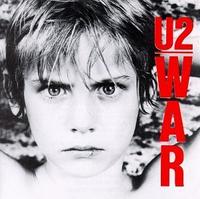
The U2 Canon--War

A lot of hay has been made, both within the critical press and within U2 fandom, about what a departure, or more specifically, a return to classic form, the band's last two albums, All that You Can't Leave Behind and How to Dismantle an Atomic Bomb have been. But what often gets forgotten in all of the talk about U2 switching styles dramatically, as they have several times throughout their career (most notably with 1992's Achtung Baby) is that War was really the first examples of a large stylistic shift, and in many ways was one of the most striking.

Listening to October and Boy back to back, one can almost hear them as having come out of the same sessions. There are real differences between the two, of course, but the basic sound is much the same. War represented a real departure for the band, the moody, almost-punk like rock songs and mid-tempo numbers from those first two albums replaced by a more poppy, melody-driven sound married to a military beat. War remains a critical favorite today, and is often thought of as the band's first "mature" album, but for me it's always been a lesser U2 disc. True, it has supplied three U2 hallmarks, three brilliant songs that would become live staples for decades hence (indeed, two have been central figures in the band's current tour). But some of the more pop-oriented, sing-songy material grates a little for me, making the album uneven. Don't misunderstand; I like the album, quite a bit, but on the U2 scale it's never been a favorite.

1. "Sunday Bloody Sunday"--One of the all-time U2 classics. A certain top ten in my ever-shifting list of the greatest U2 songs ever, and a near- and sometimes-top five finalist. I'm always surprised to hear this album version, with the violin and the somewhat less muscular and aggressive tone than I've become accustomed to from too many live versions to count. To non-hard-core fans, this is probably one of the two or three essential U2 songs, and rightly so. What I love about is is how that deadly simple but effective riff so neatly grabs at the DNA of the song. It's a gentle, melodic figure, unlike the defining musical figures off of any of the songs from the first two albums, and it serves the song well in many a context.

The "standard" live rendition, if there is such a beast, takes off from Larry's martial drum beat and the insistent, almost angry way the Edge lashes out that simple triadic figure. Another iconic live version for me is the rendition captured in the Rattle & Hum film. Bono starts the song with a short monologue about a bombing that had just occurred that day. He then sings the entire first two verses over nothing but the Edge plaintively picking out that famous figure, with a hint of angry desperation in his voice. The contrast works beautifully when the full band comes crashing in, cashing in the anger Bono had been depositing throughout the beginning of the song. Another great live rendition happened almost by accident when the band was playing Sarajevo in the late 90s. Six or seven songs into the concert, Bono blew his voice out completely, and the rest of the concert was sung by a hodge-podge of Bono singing off-the-cuff modified vocal lines to keep the range of the songs' range down, along with an ample helping of singing from the Edge. "Sunday Bloody Sunday," in particular, gets a solo Edge treatment, nothing but him and his guitar. It's a haunting, quiet version of the song.

2. "Seconds"--An atomic war ditty, from the depths of the 80s cold war. "Takes just seconds to say goodbye." I like this song, but it is a little slight, with its bouncy, devil-may-care bass line and jingle-like melody. The contrast between the lightness of the music and the seriousness of the lyric is well-taken, but not quite as effective as I suspect the band may have hoped. The song is also notable for featuring that rarity, an Edge vocal. He sounds just like Bono.

3. "New Year's Day"--The second classic to come out of this album, "New Year's Day" is a great song that makes expert use of the Edge switching back and forth from piano to guitar. Adam's rolling bass line provides an anchor for the Edge to play from, whether he's picking out the simple but effective piano figure or ringing out chords on the guitar. We also get a taste of Bono's penchant for grandstanding: "A crowd is gathered, black and white/Arms entwined/The chosen few." The songs open dream for racial harmony is hardly subtle, but the music makes it more than a gaping cliche. And that hint of doubt within the faith that is U2's core thematic trademark appears here as well, with the closing line: "Nothing changes, on New Year's Day."

4. "Like a Song"--A throwback to the October sound, with the driving drums and hard-hitting guitar that defined the first two albums, but married to a little of that martial drumbeat that's all over this album and with more overtly political lyrics. Not a classic, by any means, but a fine U2 song.

5. "Drowning Man"--The tempo slows. An acoustic guitar strums urgently while a bass figure insistently repeats. Bono sings with a sense of tension in his voice. A kind of forgotten song, but an effective piece, with some slide guitar adding to the atmosphere here and there.

6. "The Refugee"--An almost bluesy song, with a relaxed Edge sliding around notes like a country guitarist. Bono tries for a kind of angry, stylized, sing-shout that almost works. The song also features some great pounding drums from Larry, with some of that Keith Moon manicness peeking out from under his usually more-staid sound.

7. "Two Hearts Beat as One"--The pop/dance song. It's not a bad song, but something about its too-upbeat chorus, especially against the more typical U2 verses, always struck me as off, as not-U2. And the title is too cliche for comfort.

8. "Red Light"--Is that a female back-up singer at the beginning? Yes it is. And are those horns at the end? Yes they are. A stylistic experiment that never quite hangs together.

9. "Surrender"--The could-have-been-a-contender. Mostly forgotten today, but this sounds like a U2 classic, as if it could have achieved the status of "Sunday Bloody Sunday" or "New Years Day." A ringing Edge guitar opens the song, and the riff that rides over the verses is solid. The female back-up singers sound like they're back, but still, there are some great solo lines in here , precursors to Edge's masterful "Bullet the Blue Sky" work.

10. "40" --The third classic from this album. A wonderful, beautiful, insistent song based on Psalm 40, with a resigned and yet hopeful bass line providing the foundation for the Edge to ring short bursts of abbreviated riffs out over. And Bono starts to show evidence of the phrasing and ability to invest a lyric with feeling that will make him a great singer. This became the staple U2 concert closer until the late 80s, and was resurrected this year on the current Vertigo tour.

Until Whenever

Until Whenever
Things I'm Pissed I Missed

On last week's (or was it the week before's) House an Elvis Costello cover of Christina Aguillera's "Beautiful" was apparently prominently featured. So intrigued.

Until Whenever

Tuesday, September 27, 2005

Na-na-na-na-na-na-na-na-Leader!!

Two years ago I bought one of these from Best Buy--a Nomad Zen NX Jukebox. My wife gave me an "iPod" for my birthday--meaning that she said, "go get yourself an iPod, since I don't know how to pick one out." Before venturing out to my local Big Blue Box, I did a little on-line research, and decided that the Nomad was instead the way to go. I got the 30GB version for the same price that, at the time, the 10GB iPod was going for. I'm hardly a fashion plate, so the cooler styling on the iPod was pretty much a non-issue, and I figured that the interface, while reportedly much less user-friendly and buggy than the iPod's, couldn't be that bad. And you know what? I was mostly right. Sure, the software was ugly and cumbersome, and crashed a lot, but I did manage to get all of my roughly 400 CDs into the damn machine and it soon became the item I couldn't imagine living without. Having my entire music collection at my fingertips? Breathtakingly cool.

Maybe six months after purchase, the headphone jack on the Nomad started giving me problems. If it wasn't positioned right, most or all of the audio would cut out, often the vocal. Not a huge problem, but annoying nonetheless--I spent many hours, all told, twisting that damn jack to get the sound right on the machine. And more time than I care to admit listening to what I initially thought were oddly long instrumental intros, before realizing that the jack wasn't twisted right and I wasn't hearing the vocals. The removable cover (that allows for the insertion of a new battery) also broke, necessitating that a rubber band be forever wrapped around the lower quarter of the unit.

Because I am a sucker, when I bought the unit I paid the $39 for the replacement plan. And last week, just one week before said plan expired, I made use of it. Stalwart as my Nomad was, this time the temptation was too great. My wife got me an iPod again--I took the cash credit I got for the defective Nomad and applied it towards the 60GB iPod, the balance being her birthday gift to me. 7,000 songs and over 900 photos in the thing and I'm barely at half capacity. Sweet.

Now that I have one, I kind of see what the fuss is about. The interface is far more elegant, yes, and the software much cleaner and more user-friendly. But iTunes has frozen up on me several times now when connecting the iPod--so it's hardly bug-free. And, again, I'm not sure the extra money is worth the sleek styling and crisp graphics and handy-dandy click wheel. Still, I'm very happy with my new little toy and am, I suppose, now a full-fledged member of the cult. The photo feature is very cool specifically--as the embarrassingly proud father of two year-and-a-half year old twin girls, having every picture I've ever taken of them on my person at all times is, well, quite frankly, just dangerous. If you see me on the street don't say hi--unless you want to stare at my iPod's screen for a good while.

Now I'm off to explore the vast world of iPod accessories. Gulp.

Until Whenever

Thursday, September 22, 2005

The Vagaries of TV Time

The premiere of Lost last night was superb. As promised, we did get to see what was in the hatch, and the teases of information Abrams and company spooned out to us were just enough to keep us hungry. And the reveal at the end (keeping spoiler-free here) was excellent. The excellence of the episode aside, though, it got me to thinking.

Television shows traditionally, if very roughly, follow a "school-year" calendar. Premieres often take place in a September timeframe and season-finales usually take place in the late Spring. Major holidays (Christmas) often get referred to, and we often see the changing of the seasons reflected in shows as the seasons change in the real world. The reason for this is obvious, of course, given that the shows are merely reflecting the timeframe of when we watch them. Now, cable's different schedule--usually 10-15 episodes released every week, as opposed to 22 doled out over eight months--has changed those guidelines somewhat (The Sopranos follows whatever timeline makes sense for that season, for example), but network shows still, again, roughly, adhere to this schedule.

Now, you will see often enough a season finale cliffhanger that leads directly into the season premiere--no "summer break" in storytime. But even in cases like this (Gilmore Girls both this and last year, for example) the show eventually "makes up time" and by Christmas, usually, they are back on a real-world schedule. Lost, of course, is different. The entire first season was only supposed to span maybe a month, and of course the season premiere picked up directly after last year's finale. One can easily imagine seven seasons of Lost that only take up, in the show's world, several months. Which could be bad news for Walt.

As a kid, he's going to age, a lot, over the next few years, but on the show that much time presumably won't be passing. The very structure of the show would seem to spell an early end (or escape?) for Walt. It'll be interesting to see how the writers address this as the season(s) progress. (And let's hope they do--my suspension of disbelief will be strained past its breaking point if I'm asked to accept a 15-year old Walt). At least for now, the actor who plays him hasn't aged appreciably, so they seem to have some time to play with. But puberty is a fast worker; they might have less time than they think. Time, of course, will tell.

Until Whenever
Fun with Randomness

From Byzantium's Shores, a random little blog-thingy.

1. Go into your archive.
2. Find your 23rd post (or closest to).
3. Find the fifth sentence (or closest to).
4. Post the text of the sentence in your blog along with these instructions.

OK:

"The ruling is (duh) under appeal, and I have to imagine it'll be tossed like salad, but that it was ever made in the first place is . . . odd."

Ugh. The sentence that pops up would just have to be one in which I a) use the "word" "duh," and b) painfully execute a particularly ungainly simile, like an ice skater almost falling after attempting triple sowcow. (whoops--did it again)

Until Whenever

Wednesday, September 21, 2005

Music Morsels Vol. VIII - Hello Again


Michael John LaChiusa may be a bit arrogant, as his recent diatribe against the current state of musical theater ("The Great Gray Way," in Opera News) and the ensuing battle of words that ensued in print between him and one of his targets, Hairspray composer Marc Shaiman, suggests, but he does write some wonderful music. I like the light entertainment side of musical theater just fine, but would hate to see it overtake completely the more serious side epitomized by musicals like West Side Story, Sweeney Todd, Assassins, and the current The Light in the Piazza. And as far as contemporary serious musical theater composers go, LaChiusa is easily at or at least near the top of a very small class.

Hello Again was my first exposure to LaChiusa's work (it was, I believe, his second full-length musical to be produced, after First Lady Suite, but the first to be recorded). The structure of the musical, lifted from Arthur Schnitzler's play La Ronde, is simple and effective--the first scene is of a prostitute seducing a sailor in the early part of the century. In the next scene, the sailor character reappears, this time seducing a nurse in a later era. In the third scene, set even later in time, the nurse seduces a college boy. And so on. Each scene is musicalized by LaChiusa, and the conceit of time jumping allows him to play with different musical styles--80s dance-pop, music hall ditties, swing, etc. But what makes the CD work so well is how he is able to in these short vignettes musically really into these "typed" characters. So by the end of the first scene, for example, we really feel for the prostitute, she's become more than a simple type, and this is done primarily through the music. That first scene, "Hello Again" is one of the score's best, with a simple haunting climbing figure introducing the play and the prostitute with a weary meloncholy. The score is also refreshing in that LaChiusa refuses to dumb down the sex. There are some pretty funny dirty lyrics and some awkward sex scenes, all set to music--the musical can be squeamish about sex, so it's nice to hear one that isn't. The beginning few and final few scenes are disproportionately strong, and so the middle of the disc can drag a little. This is more than just a minor quibble, especially considering just how strong songs like "Hello Again," "Tom," "Mistress of the Senator," and "The Bed Was Not My Own" are. Still, this is a worthy CD of any serious musical theater collection, and a fine introduction to the prolific-by-today's-standards LaChiusa.

Grade: B

Until Whenever
. . . Into Me (I Can Not Hear the Title without then Hearing that Lyric)


Saw Crash on DVD, and it's a keeper, a great film, and easily one of the best I've seen in a long while. A quick synopsis is very hard to do given the number of characters and the intertwining plots, but basically a group of people in Christmastime LA, including a white cop and his younger partner, a black television director and his black wife, a black detective and his Hispanic partner, an Iranian man and his wife and daughter, a Hispanic locksmith and his family, a pair of black twenty-somethings, the white DA (assistant DA?) and his white wife, and a middle-aged Korean couple (among others) interact in fateful and star-crossed ways over the course of a single day. If my descriptions of the characters didn't tip you off, the thread tying everything together is racism, and more or less none of the characters get off scot-free in that regard. The movie, as honestly as any recent film I can recall, examines race in America, but more critically the ways in which different races react to each other and in the different assumptions one race makes about another can be proven or disproven in an instant, or by the same person in the same way. All the characters, to varying degrees, evidence racism in their actions and in the way they interact with each other, but to say that the movie's premise is "everyone is racist and that's OK" would be grossly wrong. The movie isn't "saying" anything in that sense, but is with great economy and art examining the racism that lies underneath us all.

The movie works because it marries good old-fashioned plotting - questions brought up early become important later, props presented in Act One reappear at critical moments in Act Three, characters tie together in surprising ways--with a wonderfully unforced, un-"arty" naturalistic style. The dialogue, the shots themselves, even the low-key electronic score evoke a very realistic sense and mood. The result is an honest film with wonderful dialogue and multi-faceted characters that plays like melodrama; call it honestly-arrived-at melodrama.

I won't go into any plot details, because much of the joy of the film is discovering the characters' stories and intersections, but I will say that the acting is uniformly excellent. Don Cheadle, Terrence Howard, Thandie Newton, Sandra Bullock, Matt Dillon, Ryan Phillippe, Jennifer Esposito, Ludacris, Brendan Fraser, Michael Pena, Larenz Tate, and a host of others do selfless work, with no one character or actor taking the forefront, in terms of story time or screen impact; this is a true ensemble. And look out for a cameo by, of all people, Tony Danza, who in just a few short minutes actually does a wonderful job of establishing his character. Is Tony Danza an underrated actor? Paul Haggis, who wrote and directed, has impressed me hugely in the past few months (he also wrote the screenplay for the marvelous Million Dollar Baby, which I wrote about here), and I'm anxious to see what he does next.

Until Whenever

Tuesday, September 20, 2005

. . . Before She Died and I Had to Raise You with Your Uncle and his Dorky Friend

I kid Bob Saget, above, but his narration for CBS' How I Met Your Mother is actually well-done. I had read good things about this new sitcom, and was not disappointed--this has the potential to be a very good sitcom, in the Friends mode of quippy twenty-somethings making their way in the big city. The cast is uniformly good and, more importantly, even in just the 22 minutes of this pilot, evidence a good team chemistry. Former Willow Alyson Hanigan and former Nick Jason Segel make an inspired pair, and they work well together in the pilot, completely selling their believability as the "cute" couple, while former Doogie Neil Patrick Harris is hilarious as the ladies-man Barney. Newcomer (to me, anyway) Josh Radnor is appealingly charming and awkward as Ted, our lead, and also-new Cobie (Cobie?) Smulders is very pretty and charming as love interest Robin.

The pilot does an excellent job of setting up the premise (an unseen Bob Saget, as a 2030-era Ted, tells his two teenaged children the story of how he met their mother) and then playing with our expectations in the final scene, promisingly setting up the show as something of a more long-term mystery than the first 21 minutes may have suggested. The writing so far is sharp and funny, if not groundbreaking, and, given that this is just a pilot, this is a very good sign. Funny, charming, at least a little moving, and with a great hook for giving the series as a whole forward momentum--a great pilot, at least. I have hopes for the series as it progresses.

Until Whenever
The Galaxy Is Flat

Caught The Hitchhiker's Guide to the Galaxy on DVD and was, to my surprise, very nonplussed. I love the books, thought the casting and design elements I had seen seemed right, and had read some good things interspersed amidst the bad, but in the end the whole thing just kind of fell apart, and I'm not sure why. The acting was good, with some casting extremely right (Arthur, Trillian, Marvin); Douglas Adams was involved and wrote the screenplay, and was able to include many of his own classic lines and bits from the novels; the look was mostly spot-on, with appropriately ugly Vogons and a great design for the Heart of Gold; and the tone of off-hand detached British satire seemed to be present. It should have worked. But it didn't. So what went wrong? I have no idea. The love story aspect was forced and out of place, to be sure, but it was far too minor to take down the film on its own. It's a mystery. Maybe the material is just not meant for the screen, maybe the particular vibe of these books, through some fundamental aspect of its nature, requires the words on the page. But the successful radio drama of the same material (which I've never heard but from all reports is great) would seem to scotch that idea. In the end, I can't think of a real reason for the movie's staleness, it's flatness as a living piece of cinema. All I know is that it didn't work. Odd.

Until Whenever
No Louis Armstrong?

The Rock and Roll Hall of Fame nominees have been announced. My take on the R&RHoF is that it's a grand idea that's been just a bit watered-down in the execution. I think the Hall has two basic problems: 1) I think it's just a little too easy to get into the Hall (Rod Stewart, The Jackson Five, Billy Joel, Aerosmith-all good, but Hall of Fame-worthy?), and 2) their definition of "rock" is a little too loose (Aretha Franklin is a remarkable singer, but not really a rock singer, now is she?).

Anyway, here are this year's nominees:

New Nominees
Miles Davis
(Brilliant, but, again, is he "rock," Bitches Brew notwithstanding?)
Cat Stevens
Blondie
The Dave Clark Five
The Paul Butterfield Blues Band
The Sir Douglas Quintet

Repeat Nominees
Black Sabbath
Chic
The J. Geils Band
Grandmaster Flash and the Furious Five
John Mellencamp
(I'm a pretty big Mellencamp fan, but even I'm not sure he belongs. Then again, given the caliber they've already let in . . . )
Lynyrd Skynrd
The Patti Smith Group
The Stooges
The Sex Pistols
Joe Tex

Until Whenever
What He Said

James Tata quotes some excerpts from a speech by Carlos Fuentes defending fiction. Tata's response rings my bells, and I suspect many of ours. As a U2 fan of no small measure, I would, however, like to know what song lifted his spirits so (see the end of his post).

Until Whenever

Monday, September 19, 2005

Well, I'm No Hotshot, But . . .

Grabbing a meme from Jaquandor:

1. It is Dan's theory that one only has time to devote to 10 outside-of-work pursuits. What makes your list? This can be an idealized version of your life (e.g. pursuits in which you are interested but just haven't found the time or ambition to start).

Who is Dan? That's what I get for not following the link Jaquandor provided I guess. Anyway, these would be:

1. The wife.
2. That one twin.
3. That other twin.
4. Writing (a little idealized; since the coming of the twins I've been very fallow).
5. Writing music (very idealized--I dabbled in this a little years ago but pretty much gave it up completely)
6. Learning to play guitar (somewhat idealized--again, since the doubling of the household the guitar has lain forlorn.)
7. Learning to play piano. (Idealized. I got years ago as far as I could get without a) practicing rigorously and b) taking actual lessons.)
8. Reading.
9. Movies/TV
10. Music.

A list like this really makes me realize how much I give up on the interests that would take actual effort (writing, playing instruments), as opposed to the passive ones (watching movies, listening to music). Laziness can be quite insidious, no?

2. What are the last five albums you bought? Are you just kind of buying albums on a whim these days or following any kind of overarching plan-such as exploring a genre or working your way through a backlog of albums you've wanted to buy for some time?

I'm including gifts, since I don't buy all that many CDs, given my overall tightness with a buck:

No Direction Home: The Soundtrack (The Bootleg Series Volume Seven) - Bob Dylan
Excellent, with some great early stuff (the highlight: a lost version of a young Bob doing a spare and lean take on "This Land Is Your Land"). I am getting to the point, though, where I have too many multiple versions of some songs.

Charlie and the Chocolate Factory - Danny Elfman
Haven't listened enough to judge, but at first blush sounds like generic Elfman. The songs are great though.

The Light in the Piazza - Adam Guettel
Gorgeous score.

Shostakovich: Symphony #14
A bit taken aback by all the singing, but it is growing on me.

Avenue Q
Hil-freakin-arious.

I keep a wish list ongoing and make ample use of the inter-library loan system to check things out. Since I'm pretty hesitant to splurge on new CDs I tend to have a few items at the top of the list that I know I'll want.

3. Everyone has an issue (at least one)-political or philosophical-that is kind of their personal baby. One on which they feel they have an enlightened view in a greater world that just either doesn't get it or doesn't care. Tell us about it-and attempt to be brief.

Well, I wouldn't agree that I have a particularly enlightened view on anything. But, briefly, the notion that people would out-of-hand dismiss homosexuality as aberrant purely on the word of a brief mention in one book completely and wholly baffling.

4. Prairie, mountains, woods, desert, lake, the sea. Which calls to you the most? Where would you most choose to reside? RANK THEM!

Lake
Sea
Mountain
Woods
Prairie
Desert

With the caveat that it is a lake I can swim in. Swimming on my back in the pure, clean waters of Echo Lake in New Hampshire, and staring up at the green beauty of Mount Cannon rising from it, is one of the purest pleasures I can remember ever basking in.

5. Guilty pleasure TV. Is there a show that would be condemned by your peers, but yet you find yourself watching it on a regular basis? Let's hear it.

The Apprentice. And the thing of it is, I agree with the peers. It's bad. But I am still giving Joey a fighting chance, and still think Will & Grace gets off some of the best (and naughtiest) one-liners on TV, and still think ER combines great characters and drama very effectively, and am actually too lazy to change the channel.

Until Whenever
RockStar Week Ten

Pre-final thoughts. Suzie was very good, but the never-ending string of "Come on!"s was starting to get to me. I do think that INXS is missing the boat in going with a guy though; the marketing angle of a woman taking over for a man is priceless, and I think musically speaking it would have made for a more interesting tour and album.

Of the final three, I'm really non-plussed. None was a favorite, and I really have no stake in who ends up winning. I still stand by my very early stand that Ty and Jordis were the best singers in the group. Jordis, in particular, is the only singer I'm keen on hearing more of, and the only singer I've been moved to buy songs from over at rockstar.msn.com. My thinking is that that huge misfire at the end of "Dream On" several weeks back, when she went for the high note and completely botched it, just completely took her confidence away. Maybe it's an age thing, I don't know, but whatever it is it's a shame. Of the three finalists, my thoughts are:

Marty: A very good singer, with an excellent presence, who's all wrong for INXS. I actually am curious to hear what he would do with them, should he win, just because I think they are so mismatched.

J.D.: Presence and charisma, and a strong, if slightly narcissistic voice, but just comes across as a total ass.

MiG: A bit too theatrical, but so is some of INXS' stuff. If forced to choose I'd probably pick him as my preferred winner, even if he does spell his name like a moron.

Until Whenever