M.E.
Random Emmy thoughts:
Ellen was very funny. Every time I watch one of these I'm surprised all over again at how much of the host's job is to do a funny monologue and then mostly disappear. Am I that dumb? I did like Ellen's attempts to add some quick comedy bits to the proceedings; the recurring gag with the director and the time check was pretty funny I thought. And her monologue was spot-on, especially the tongue-not-really-in-cheek request to host the Oscars.
The Emmy Idol thing, while worth trying, ended up falling flat, I think because the performances were unsure--are we mocking this song or paying tribute to it? If they bring it back next year they should either do good songs with good singers or bad songs with bad singers, to make the tone clearer.
The Emmy memories were a nice touch given their brevity. a few more and it would have gotten annoying.
Serious Letterman is off-putting, like watching Gilbert Gottfried try to do Hamlet.
Telling, and appropriate, that the clips submitted by the writing teams for the "Writing, Variety, Music, or Comedy Program" were the funniest part of the night, especially Conan O'Brien's hilarious mock-self-love. He was also the funniest presenter of the night. Next year, how about hitring these nominees to do the show? Let each have a half-hour to go nuts with.
Wins I was happy to see: Lost for drama; Raymond for comedy (never seen Desperate Housewives but doubt it's really a comedy, and as good as Arrested Development is in a "new and exciting" way, Raymond was equally as good in a "well-crafted, traditional" way--and one way isn't, by its very nature, better than the other, no matter what the critics may insinuate); Felicity Huffman (just because she was so good in Sports Night); and J.J Abrams' for his direction of the Lost pilot.
Wins I thought were undeserved: I did think the Raymond team deserved the writing one, just for how elegantly and simply they cracked the series finale nut that has bedeviled so mnay other writers; Raymond's Garrett wasn't so good as to overclipse co-star Peter Boyle again; I may have never seen Boston Legal, but I have to doubt that Shatner's work there was better than O'Quinn's wonderful Lost work; and Roberts on Raymond was getting stale, and the little I saw of Jessica Walters has me thinking she should have taken home that particular prize. Also--I am very intrigued to see "Three Stories," the House episode that won the writing award over Lost's "Walkabout." My wife saw it and assured me that it was great, so it may indeed have been worthy, but my jury will have to remain out.
Until Whenever
Monday, September 19, 2005


Friday, September 16, 2005
Doin' the Friday Shuffle
Busy week; my regrets for the lack of posts. A quick shuffle before I dive back into the maelstrom:
1. "Follow the Fold" - Frank Loesser - Guys and Dolls (1992 Broadway Revival Cast)
Throway bit of Salvation Army mockery.
2. "Wheels of a Dream" - Lyyn Flaherty and Stephen Ahrens - Ragtime (Original Broadway Cast)
Big, melodic, Copeland-tinged, big voiced, unabashed Broadway anthem. God bless Flaherty and Ahrens.
3. "Isn't It?" - Stephen Sondheim - Saturday Night (2000 Off-Broadway Revival Cast)
Sweet little waltz from Sondheim's near-first produced show. (It famously lost its backing in the 50s only to be resurrected in the late 90s, with Sondheim fanatics (myself included) demanding every bit of music the man ever wrote to be released.)
4. "Slow Dancing" - U2 - Bootleg
Taken, I think, off of a radio show, just Bono and the Edge on acoustic guitar on this Willy Nelson homage.
5. "Addison's City" - Stephen Sondheim - Bounce (World Premiere Recording)
See above. Another Sondheim show that keeps flopping but has made it to disc nonetheless. Not a bad score, but the material is a bit dry. This near-patter song is a bit underwhelming, I do have to say.
6. "Cheerful Little Earful" - Ella Fitzgerald - Ella Sings the Gershwin Songbook
Jazzy Gershwin number.
7. "Never Again" - Alan Menken and Tim Rice - King David (World Premiere Recording)
A gorgeous, completely forgotten score from the man who gave us Beauty and the Beast, Alladin, and Little Shop of Horrors. This is a gorgeous ballad of sad defiance.
8. "Frequent Thing" - Thomas Newman - Meet Joe Black (film score)
Delicate melodic work from Newman on a fine score.
9. "Fool to Think" - Dave Matthews Band - Everyday
Not one of my favorite DMB songs (the wife is more the fan), but the chorus has a cool syncopated driving beat thing going for it.
10. "By Strauss" - Ella Fitzgerald - Ella Sings the Gershwin Songbook
Brilliantly funny lyric, and a great piece of Strauss-pastiche from Gershwin.
Until Whenever
Tuesday, September 13, 2005
Music Morsels Vol. VII - Glory
 James Horner gets a bad rap, some of it deserved, for endlessly recycling musical material, both his own and others', in his film scores. Alex Ross gives him a well-done takedown in a 1998 New Yorker article (posted by Ross in his blog here), noting, for instance, that the opening theme from his score for Aliens is a direct transcription of the opening to Shostakovich's 14th symphony (the 1st samples from each of the linked albums demonstrate this nicely). And yet a few of my favorite film scores are Horner's, including Glory, a beautiful work.
Horner may have, as Ross accuses, written the main theme from Glory by smooshing together Prokofiev's "Humming Chorus," from Ivan the Terrible, and Elgar's "Enigma Variations," but, being unfamiliar with either work, I never noticed. (And I don't at all doubt Ross' word; when I first read his article I was equally unfamiliar with the Shostakovich 14th symphony; having heard it since I can attest that the Aliens theme is a direct swipe). Horner also gets a wonderful, and very appropriate sound, from the Boys Choir of Harlem, who appear extensively throughout the score. The end-of-the-day point for me is that this music is beautiful, regardless of the source, full of stirring marches, elegiac choral lamentations, and sweeping romanticism. As John Williams taught us nearly 30 years ago, with his landmark Star Wars score, romantic pastiche can work very well when handled right, and for my money Horner handles this material very, very well, regardless of how much of it is, in fact, his. After all, the line between homage and thievery is exceedingly thin. There's a moment in Williams' ET score that reminds me very strongly of a theme from the last movement of Beethoven's Fifth symphony. Did Williams steal it? Is it an homage to Beethoven? Who knows? Some may claim that Horner crosses that line by leaps and bounds, and perhaps in some cases he has. But you know what? I can't stop loving this disc if he, indeed, has--so in the end it really doesn't matter.
Grade: A-
Until Whenever
James Horner gets a bad rap, some of it deserved, for endlessly recycling musical material, both his own and others', in his film scores. Alex Ross gives him a well-done takedown in a 1998 New Yorker article (posted by Ross in his blog here), noting, for instance, that the opening theme from his score for Aliens is a direct transcription of the opening to Shostakovich's 14th symphony (the 1st samples from each of the linked albums demonstrate this nicely). And yet a few of my favorite film scores are Horner's, including Glory, a beautiful work.Horner may have, as Ross accuses, written the main theme from Glory by smooshing together Prokofiev's "Humming Chorus," from Ivan the Terrible, and Elgar's "Enigma Variations," but, being unfamiliar with either work, I never noticed. (And I don't at all doubt Ross' word; when I first read his article I was equally unfamiliar with the Shostakovich 14th symphony; having heard it since I can attest that the Aliens theme is a direct swipe). Horner also gets a wonderful, and very appropriate sound, from the Boys Choir of Harlem, who appear extensively throughout the score. The end-of-the-day point for me is that this music is beautiful, regardless of the source, full of stirring marches, elegiac choral lamentations, and sweeping romanticism. As John Williams taught us nearly 30 years ago, with his landmark Star Wars score, romantic pastiche can work very well when handled right, and for my money Horner handles this material very, very well, regardless of how much of it is, in fact, his. After all, the line between homage and thievery is exceedingly thin. There's a moment in Williams' ET score that reminds me very strongly of a theme from the last movement of Beethoven's Fifth symphony. Did Williams steal it? Is it an homage to Beethoven? Who knows? Some may claim that Horner crosses that line by leaps and bounds, and perhaps in some cases he has. But you know what? I can't stop loving this disc if he, indeed, has--so in the end it really doesn't matter.
Grade: A-
Until Whenever
Monday, September 12, 2005
Po' Boy
Bob Dylan is getting the same Broadway treatment Billy Joel got. Twyla Tharp, the choreographer who had a big success with the dance musical Movin' On a few years back, is debuting her new show, based around the music of Bob Dylan, in late January. It's not that I can't imagine a compelling theatrical narrative being created around Dylan's music, I can. It's just that Tharp's specialty is choreography. If this is going to be similar in form to the Joel show, it'll be nothing but dances, with a band and a single singer doing Dylan songs on stage. No dialogue, no dramatic singing; more of a ballet than a musical, with the story told through dance. But--is Dylan's music really danceable? Inquiring minds want to know. I try to remain open-minded, but color me dubious.
Until Whenever
The U2 Canon - October
 Continuing my song-by song stroll through the U2 discography, we turn today to 1982's October. Many a U2 fan (but not nearly all) considers this to be the least of their albums, and I'd more or less agree. Like on Boy, this is a still-young band developing and discovering their sound, and is not quite yet the work of "mature" artists. It's pretty much the only U2 album to make any kind of extensive effort at including traditional "Irish" instruments, a move that has its moments but in the end doesn't quite work for their music. Still, it's hardly an unworthy effort. Bono's singing hasn't yet graduated to the more full-voiced roar he would employ in later years; he's nowhere near the singer he will become. However the Edge's guitar work continues to evolve, and he's here really starting to nail down certain elements of the signature Edge sound. The album, like its predecessor, does do a very good job of maintaining a tone throughout, a slightly melancholy, autumnal tone that does justice to the title.
Gloria--U2's much vaunted and pored over status as a "Christian band" gets a workout here. The lyrics, while they weren't quite so to my somewhat oblivious teenaged self, are pretty clear: "only in you I'm complete" isn't a line about a girl, and the Latin stuff pretty much tips off the whole thing. For a song about Jesus, though, it rocks quite nicely. Musically they've more or less continued in the Boy vein, although the sound is a bit fuller and the deepening and maturing of Bono's voice has, if only barely, begun. I love Adam's adept little bass solo in the break, and the briefest of Edge solos that leads out of the bridge from that solo.
I Fall Down--October features a lot more piano than its predecessor, and if none of it is, shall we say, virtuoustic, it's still pretty and serves the songs well, as in the intro here. Hints of future more heavy and distorted Edge guitar lines peek out of the chorus, and Bono begins to play with a rougher, more overtly "rock voice" in parts.
I Threw a Brick through a Window--A mild hint of funk teases into the guitar riff here, with the U2 hallmark of having the verses be dominated by a driving bass line with only stabs of guitar, as opposed to full strumming or other backing, showing itself strongly. The adolescent rebellion lyrics are, already, starting to chafe and feel a bit forced.
Rejoice--Completely classic U2 riff, a bit of U2 DNA. Another more overtly religious song, with some well-meant but nonetheless trite stuff about "changing the world in me."
Fire--Almost halfway through the album and still not a ballad in sight. This more mid-tempo song could have been a Boy outtake.
Tomorrow--Ah, there's the ballad. An Irish instrument, with a bagpipe-like sound sets the tone, and the bass alternates between notes like a foreboding metronome. At the end they pick up the tempo and volume, an old trick, but one they hadn't trotted out as of yet. Perhaps the theme of U2's music gets highlighted in this song. It's a theme that will reappear in song after song, that of the pull between wanting to be joyful in Jesus' imminent return, and in his glory, and anger at the state of the world as it is, anger that he hasn't yet returned. The "Won't you come back tomorrow?" refrain has hints of both that joy and frustration, and it's an impressive balance for such a young band to pull off, all the more so given how well the music captures that ambiguity too.
October--A U2 classic, a gorgeous piano ballad, with lyrics only at the very end. Sure, it's a ridiculously simple piano ballad (how do I know? Because I can play it; and I don't play piano), but effective nonetheless, and wonderfully evocative of the month its title spells out.
With a Shout--Back to the religion well. "To the side of a hill/Blood was spilt/We were still looking at each other/But we're going back there/Jerusalem/Jerusalem" A spitfire of a song, with a driving, unrelenting bass line, and some stellar guitar work from the Edge pushing the song forward. U2 would never really get this explicitly religious again, with lines like "I want to go to the foot of Mount Zion/To the foot of He who made me see."
Stranger in a Strange Land--A moody song, with a great bass line riding up and down the scale like a man riding a bull and trying not to get thrown. Bono is in specific, character-based, storytelling mode, a lyrical style he rarely uses, and for good reason. While other story-focused songwriters can get a lot of detail into a song, and make the story at least somewhat clear (Bruce Springsteen), Bono lacks the discipline, so the song remains just hazy, with details that don't really add up to a clear picture.
Scarlet--The song that feels like the closer, with its martial drumbeat, it's quiet piano, and its rolling bass line. A beautiful and underrated U2 song.
Is That All?--The band roars back from the false ending with a fiery riff, one they would use live as the intro for Boy's "The Electric Company." The too-simple lyrics come off as empty instead of profound, but the riff and driving pulse of the song make up for them.
Until Whenever
Continuing my song-by song stroll through the U2 discography, we turn today to 1982's October. Many a U2 fan (but not nearly all) considers this to be the least of their albums, and I'd more or less agree. Like on Boy, this is a still-young band developing and discovering their sound, and is not quite yet the work of "mature" artists. It's pretty much the only U2 album to make any kind of extensive effort at including traditional "Irish" instruments, a move that has its moments but in the end doesn't quite work for their music. Still, it's hardly an unworthy effort. Bono's singing hasn't yet graduated to the more full-voiced roar he would employ in later years; he's nowhere near the singer he will become. However the Edge's guitar work continues to evolve, and he's here really starting to nail down certain elements of the signature Edge sound. The album, like its predecessor, does do a very good job of maintaining a tone throughout, a slightly melancholy, autumnal tone that does justice to the title.Gloria--U2's much vaunted and pored over status as a "Christian band" gets a workout here. The lyrics, while they weren't quite so to my somewhat oblivious teenaged self, are pretty clear: "only in you I'm complete" isn't a line about a girl, and the Latin stuff pretty much tips off the whole thing. For a song about Jesus, though, it rocks quite nicely. Musically they've more or less continued in the Boy vein, although the sound is a bit fuller and the deepening and maturing of Bono's voice has, if only barely, begun. I love Adam's adept little bass solo in the break, and the briefest of Edge solos that leads out of the bridge from that solo.
I Fall Down--October features a lot more piano than its predecessor, and if none of it is, shall we say, virtuoustic, it's still pretty and serves the songs well, as in the intro here. Hints of future more heavy and distorted Edge guitar lines peek out of the chorus, and Bono begins to play with a rougher, more overtly "rock voice" in parts.
I Threw a Brick through a Window--A mild hint of funk teases into the guitar riff here, with the U2 hallmark of having the verses be dominated by a driving bass line with only stabs of guitar, as opposed to full strumming or other backing, showing itself strongly. The adolescent rebellion lyrics are, already, starting to chafe and feel a bit forced.
Rejoice--Completely classic U2 riff, a bit of U2 DNA. Another more overtly religious song, with some well-meant but nonetheless trite stuff about "changing the world in me."
Fire--Almost halfway through the album and still not a ballad in sight. This more mid-tempo song could have been a Boy outtake.
Tomorrow--Ah, there's the ballad. An Irish instrument, with a bagpipe-like sound sets the tone, and the bass alternates between notes like a foreboding metronome. At the end they pick up the tempo and volume, an old trick, but one they hadn't trotted out as of yet. Perhaps the theme of U2's music gets highlighted in this song. It's a theme that will reappear in song after song, that of the pull between wanting to be joyful in Jesus' imminent return, and in his glory, and anger at the state of the world as it is, anger that he hasn't yet returned. The "Won't you come back tomorrow?" refrain has hints of both that joy and frustration, and it's an impressive balance for such a young band to pull off, all the more so given how well the music captures that ambiguity too.
October--A U2 classic, a gorgeous piano ballad, with lyrics only at the very end. Sure, it's a ridiculously simple piano ballad (how do I know? Because I can play it; and I don't play piano), but effective nonetheless, and wonderfully evocative of the month its title spells out.
With a Shout--Back to the religion well. "To the side of a hill/Blood was spilt/We were still looking at each other/But we're going back there/Jerusalem/Jerusalem" A spitfire of a song, with a driving, unrelenting bass line, and some stellar guitar work from the Edge pushing the song forward. U2 would never really get this explicitly religious again, with lines like "I want to go to the foot of Mount Zion/To the foot of He who made me see."
Stranger in a Strange Land--A moody song, with a great bass line riding up and down the scale like a man riding a bull and trying not to get thrown. Bono is in specific, character-based, storytelling mode, a lyrical style he rarely uses, and for good reason. While other story-focused songwriters can get a lot of detail into a song, and make the story at least somewhat clear (Bruce Springsteen), Bono lacks the discipline, so the song remains just hazy, with details that don't really add up to a clear picture.
Scarlet--The song that feels like the closer, with its martial drumbeat, it's quiet piano, and its rolling bass line. A beautiful and underrated U2 song.
Is That All?--The band roars back from the false ending with a fiery riff, one they would use live as the intro for Boy's "The Electric Company." The too-simple lyrics come off as empty instead of profound, but the riff and driving pulse of the song make up for them.
Until Whenever
Friday, September 09, 2005
What I've Done
Lynn asks for lots of folks to pick up this meme, so, well, I shall:
"List all of the accomplishments in Heinlein's famous "specialization" quote and identify the ones you've actually done. First, the quote:
"A human being should be able to change a diaper, plan an invasion, butcher a hog, conn a ship, design a building, write a sonnet, balance accounts, build a wall, set a bone, comfort the dying, take orders, give orders, cooperate, act alone, solve equations, analyze a new problem, pitch manure, program a computer, cook a tasty meal, fight efficiently, die gallantly. Specialization is for insects." "
change a diaper A diaper? Try several a day. (Well, I'm at work all day, so that's not quite true, but I do change copious diapers.
plan an invasion No. Even in my D&D days I wasn't one for much planning.
butcher a hog No. Or any other animal for that matter.
conn a ship No. Not even sure what that means.
design a building No.
write a sonnet Yes, for a high school English class, but I don't remember a thing about it.
balance accounts Sure.
build a wall No.
set a bone No.
comfort the dying No, not yet.
take orders Of course.
give orders I've directed plays, so yes.
cooperate Sure.
act alone I guess.
solve equations Five semesters of calculus, baby! (Two alone of Calc IV)
analyze a new problem Probably?
pitch manure Maybe? Does cleaning a field of horse manure count?
program a computer Technically, in college programming classes (don't remember a thing)
cook a tasty meal Yes, if I do say so myself.
fight efficiently No. One fight, one loss.
die gallantly Ask me in seventy years (God willing)
Until Whenever
Doin' the Friday Shuffle
1. "'S Wonderful" - Ella Fitzgerald - Ella Sings the George Gershwin Songbook
A great Gershwin song, and Ella delivers it with just the right tone of happy, surprised, delight.
2. "Lady with the Spinning Head" - U2 - One (Single)
What used to be called a b-side, this sounds like an early stab at The Fly, but it's still a decent U2 song all on its own.
3. "Paperback Writer" - The Beatles - The Beatles 1
I'm not a huge Beatles fan (gasp), but that they were damn strong songwriters is undeniable.
4. "Will I?" - Jonathan Larson - Rent (Original Broadway Cast)
One of my favorite numbers from this score. A kind of round, with various characters singing about the uncertainty of the future living with AIDS brings: "Will I lose my dignity/Will someone care/Will I wake tomorrow/From this nightmare?"
5. "Goodbye" - John Ottman - X-Men 2 (score)
A decent, but not great, score, that's a tad too generic for my tastes.
6. "New York (Live)" - U2 - U2 Elevation Tour 2001 - Live from Boston
One of the lesser songs off of All that You Can't Leave Behind, it fared much better live than on disc. I wish they had shelved this for the tour and done that album's "When I Look at the World" instead.
7. "Any Place I Hang My Hat Is Home" -- Audra McDonald -- How Glory Goes
I like Audra better when she's doing contemporary musical theater songs, but it can't be denied that she excels on these old standards as well.
8. "Last Boat Leaving" - Elvis Costello - Spike
One of Costello's prettier songs, a Celtic-feeling ballad with some great guitar (mandolin?) work.
9. "Variation VII2" - Brahms - Beethoven's Moonlight Sonata
I bought the disc for the Beethoven, and have probably only listened to the Brahms once. My loss.
10 "But Not for Me" -- Elvis Costello -- Glory of Gershwin
A star-studded Gershwin tribute album featuring harmonica virtuoso Larry Adler on all tracks. He adds a nice soulfulness to Costello's respectful but impassioned rendition of this great Gershwin ballad.
Until Whenever
5. "
Thursday, September 08, 2005
The Known World
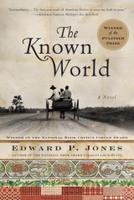
"The evening his master died he worked again well after he ended the day for the other adults, his own wife among them, and sent them back with hunger and tiredness to their cabins. The young ones, his son among them, had been sent out of the fields an hour or so before the adults, to prepare the late supper and, if there was time enough, to play in the few minutes of sun that were left. When he, Moses, finally freed himself of the ancient and brittle harness that connected him to the oldest mule his master owned, all that was left of the sun was a five-inch long memory of red orange laid out in still waves across the horizon between two mountains on the left and one on the right. He had been in the fields for all of fifteen hours. He paused before leaving the fields as evening quiet wrapped itself about him. The mule quivered, wanting home and rest. Moses closed his eyes and bent down and took a pinch of the soil and ate it with no more thought than if it were a spot of cornbread. He worked the dirt around in his mouth and swallowed, leaning his head back and opening his eyes in time to see the strip of sun fade to dark blue and then to nothing. He was the only man in the realm, slave or free, who ate dirt, but while the bondage woman, particularly the pregnant ones, ate it for some incomprehensible need, for that something that ash cakes and apples and fatback did not give their bodies, he ate it not only to discover the strengths and weaknesses of the field, but because the eating of it tied him to the only thing in his small world that meant almost as much as his own life."
The preceding is the first paragraph of Edward P. Jones' Pulitzer prize-winning novel The Known World. When the book first came out in 2003, I read it and was, frankly just overwhelmed by its scope and depth. I knew it was a great novel but at the same time I knew I hadn't gotten nearly enough out of it. Its huge, sprawling cast and time-jumping narrative had, at least in part, defeated me. I knew I had to read it again.
Last week I finished re-reading the novel, and my suspicions were born out. This is, perhaps, the greatest novel I have ever read. Jones is a masterful writer, but, and this is what I find so remarkable, I have no idea as to how he does it. As that opening paragraph ably demonstrates, his narrative voice is a very simple and direct one. He tells his story plainly and cleanly, in direct, clear sentences, and yet the cumulative effect of this style is one of great power. The reader feels connected to the characters, and their story, in a way that seems counterintuitive with such a, in many ways, dry style.
The story itself should get a lot of the credit to be sure. The germ of the novel lies in the fact that during slavery times in the South there were a number, not a large number but a number all the same, of freed blacks who owned slaves themselves. The novel is about one such imaginary black man in Virginia, Henry Townsend, the man whose death is referred to in the very first line of the novel above. Townsend's death precipitates many a flashback, through which we learn his history, how he came to be freed, how he came to own slaves, all of it. We also learn much about seemingly every person in the imaginary Manchester County Jones sets his story in. The cast of characters is, as I said, large, but each is painted with a sure hand and a keen ear. Throughout the course of the novel, we learn more about all of these characters as the story moves in fits and starts to tell us of both Henry's past and what happens to those his life has touched after his death. It's not a straightforward, point A to point B narrative but rather a weaved tapestry of connected stories. Nonetheless, this is most decisively one cohesive novel, not a loose collection of stories. Every character and every story tie together into one epic piece, in as seamless a way as I can imagine.
Through this large story, Jones also does a fine job of describing the time and place. We learn much about slavery and the relationships among slaves and between them and his masters through the matter-of-fact stories Jones tells. It's an emotional novel, to be sure, and all the more so because Jones steadfastly refuses to grandstand or allow melodrama or pathos to enter his style. That near-dry, putting-the-facts-on-the-table style is consistent throughout, and when dramatic events happen, and they do, they hit all the harder for that restraint.
Suffice it to say I recommend this novel with all my being. As I said, I'm having a hard time making a case for any other to take its place as the greatest I've ever read (sorry Stephen King).
Until Whenever
Rock Star: Week Nine--Alas, Poor Jordis
A sad week eight for this fan. I truly think Jordis had the voice and sensibility best suited to doing something interesting with INXS, if not best suited to recreating Michael Hutchence. But she did seem nervous the past few weeks, and the intensity of the competition just may have been too much. In any case, she'll be sorely missed.
This week:
J.D.--"Come As You Are" (Nirvana) and "Pretty Vegas" (original)
J.D. elects to do "Come As You Are" with pretty much just solo piano for the first two-thirds, and the effect kind of works, although his mannered voicde and presence continue to grate. His original ain't half bad, and it does have something of an INXS vibe. The public would vote his original as tea best the next day.
Suzie--"I Can't Make You Love Me" (Bonnie Raitt) and "Soul Life" (original)
Suzie sings the tender ballad well, but her soulful, big and open voice just doesn't seem right for their band, INXS, to me. Her original is a little too easy-going and tame for an INXS song, and its fairly generic soul vibe doesn't really impress me.
MiG--"Hard to Handle" (Black Crowes) and "Home in Me" (original)
MiG is a good singer, but has no real fee lfor the blues (not that he'd need it to do INXS stuff) and his rendition of the Crowes song is rushed and thin. His ballad is a nightmare, a sappy, treacly bit of overcooked fluff that would feel soft at the end of a made-for-DVD Barbie movie. Debbie Gibson heard the song and barfed. Richard Marx was embarrassed by its cheese. Celine Dion couldn't believe the schmaltz. Really bad.
Jordis--"We Are the Champions" (Queen) and "Try Not" (original)
Jordis handles the Queen song ably, though she does stumble over some of the more tricky rhythms. Every time someone sings Queen just how good of a singer Freddie Mercury was just becomes more and more apparent. That reduced, more nervous stage presence is still present. Her original, I thought, was the best of the bunch, and very INXS-ready--funky with a hard enough rock edge. I'm very, very curious to see what she does after this show, whether or not she is able to put together a high-profile career, because she really is, if not the best technical vocalist, the best singer in the bunch. But that nervousness, nowhere in evicence earlier, was getting to be an issue.
Marty--"Everlong (Foo Fighters) and "Trees" (original)
Marty does a great job of giving INXS what they want by stripping "Everlong" down to an acoustic number, letting him scream less and sing more. And his song is the catchiest of the bunch, with a very clear modern-rock sound that would be comfortable on radio today. Marty is good, but I still can't see him doing INXS songs. Nonetheless, the band seems intrigued.
The elimination night had one surprise, with J.D. in the bottom three, but, as might have been expected, Jordis got the boot. With four left, the show really gets into the nitty-gritty next week.
Until Whenever
No. Rubber. Ears.
 I'm pretty sure I had heard this before, but Marvel is going to try and pull a Lucas and make their own films, rather than sell the rights to other studios. Paramount has agreed to play the role that Fox plays for Lucas and distribute the films for a fee. The key grafs:
Marvel Entertainment -- previously Marvel Enterprises -- is set to announce Tuesday its name change and completion of its loan package, and also will divulge that superheroes Captain America, the Avengers, Nick Fury, Black Panther, Ant-Man, Cloak & Dagger, Dr. Strange, Hawkeye, Power Pack and Shang-Chi will get the feature-film treatment.
Paramount Pictures, under a deal announced in April shortly after Brad Grey took the helm of the studio, will distribute and market the films, the first of which will be released in 2008 or possibly sooner.
I'm crossing my fingers as many times as they'll go for a good Captain America movie, the good Captain being, easily, my favorite superhero character from way back. I have strong doubts they'd do it this way, but for my money the best, if somewhat risky, way to go would be to do the first movie completely retro. World War II, Red Skull, Bucky, the works. Big, epic, war battles, Nazis, thrilling action--do it all.
See, the central appeal of Captain America is in large part the whole "man out of time" aspect. The notion that this great, near-mythological hero from decades past has returned to fight the good fight. It's going to be hard to really capture that in one movie through flashbacks and the like. But if they take the time to spend a good two to two and a half hours building that reputation, actually showing us the whole World War II history of Cap, the origin and all of it, in one whole movie, only to end with a huge cliffhanger--Cap being frozen and then found 50, 60 years later--then they have not only the background to make the character really compelling to new audiences (and face it, Cap isn't that well-known outside of the comics-savvy community), but also one heck of a hook for the sequel.
That's what I'd do, anyway, but, in case you weren't sure, I'm not in charge.
Until Whenever
P.S.--While the universally acknowledged horribleness of the low-budget early-90s Captain America film (the source of this post's title) is entirely deserved, they did get one thing right--the teaser poster. The font and backlighting may be pure cheese, but the concept is perfect. Captain America's mighty shield indeed.

I'm pretty sure I had heard this before, but Marvel is going to try and pull a Lucas and make their own films, rather than sell the rights to other studios. Paramount has agreed to play the role that Fox plays for Lucas and distribute the films for a fee. The key grafs:Marvel Entertainment -- previously Marvel Enterprises -- is set to announce Tuesday its name change and completion of its loan package, and also will divulge that superheroes Captain America, the Avengers, Nick Fury, Black Panther, Ant-Man, Cloak & Dagger, Dr. Strange, Hawkeye, Power Pack and Shang-Chi will get the feature-film treatment.
Paramount Pictures, under a deal announced in April shortly after Brad Grey took the helm of the studio, will distribute and market the films, the first of which will be released in 2008 or possibly sooner.
I'm crossing my fingers as many times as they'll go for a good Captain America movie, the good Captain being, easily, my favorite superhero character from way back. I have strong doubts they'd do it this way, but for my money the best, if somewhat risky, way to go would be to do the first movie completely retro. World War II, Red Skull, Bucky, the works. Big, epic, war battles, Nazis, thrilling action--do it all.
See, the central appeal of Captain America is in large part the whole "man out of time" aspect. The notion that this great, near-mythological hero from decades past has returned to fight the good fight. It's going to be hard to really capture that in one movie through flashbacks and the like. But if they take the time to spend a good two to two and a half hours building that reputation, actually showing us the whole World War II history of Cap, the origin and all of it, in one whole movie, only to end with a huge cliffhanger--Cap being frozen and then found 50, 60 years later--then they have not only the background to make the character really compelling to new audiences (and face it, Cap isn't that well-known outside of the comics-savvy community), but also one heck of a hook for the sequel.
That's what I'd do, anyway, but, in case you weren't sure, I'm not in charge.
Until Whenever
P.S.--While the universally acknowledged horribleness of the low-budget early-90s Captain America film (the source of this post's title) is entirely deserved, they did get one thing right--the teaser poster. The font and backlighting may be pure cheese, but the concept is perfect. Captain America's mighty shield indeed.
Wednesday, September 07, 2005
Mixing It Up
Lefty is hosting a contest to win a Darth Tater toy, and yours truly has entered. The task was to create a CD mix, with the selections picked to fit any of three criteria (see here for details). I elected to go the alphabetical route, and, selected a set of songs united by their mellow vibe, the intent to get away from the alterna-, indie-, and cult-rock selections that so often pop up on these types of mixes and instead present some classics and some beautiful new music. I was pretty liberal in my application of the alphabetical dictum, using the last names of composers and/or artists indiscriminately to get the songs I wanted. I also limited myself to one disc, so some letters, alas, were left without representation. Did I succeed? Lefty's response is here; suffice it to say I most likely won't be winning the dastardly Darth in question (damn my eternal love for Audra McDonald!!).
Anyway, here is the mix I sent off to Lefty:
Tosy and Cosh's Mellow Mix for a Lazy Summer Day
1. Louis Armstrong--"Summer Song" (written by Dave Brubeck)
The defining summer song for me; just an exquisite piece of writing with a beautifully laconic melody.
2. Audra McDonald--"Stars and the Moon" (written by Jason Robert Brown)
A wistful little cabaret number that has, in its short life, already become something of a standard. A sad song about the choices people make in life. The first of many Audra appearances. The Audra overload wasn't by design so much as the natural result of wanting to include several of the "new" musical theater composers, and of Audra's interpretations of their songs being so definitive in so many cases.
3. Elvis Costello--"God Give Me Strength" (written by Elvis Costello and Burt Bacharach)
Elvis hits just completely nails the high note at the end of this song. Painted from Memory, the Bacharach-collaboration album from which I pulled this track, is a wonderful album full of twisty, melancholy melodies sung beautifully by Costello (for a look at why Costello ranks as one of the great rock singers, see here)
4. Bob Dylan--"Sugar Baby"
Possibly my favorite Dylan song. So suffused with feeling and sadness, and one of the great vocals.
5. Ella Fitzgerald--"Love Is Here to Stay: (written by George Gershwin)
One of my favorite Gershwin songs, this version is second only to Nat King Cole's sublime rendition, which was my wife and I's wedding song.
6. Audra McDonald--"How Glory Goes" (written by Adam Guettel)
A remarkable song, sung from the point of view of one about to die asking God what heaven will be like.
7. k.d. lang--"Hallelujah" (written by Leonard Cohen)
As Lefty says, a rendition to challenge the much-beloved Jeff Buckley cover.
8. Audra McDonald--"Tom" (written by Michael John LaChiusa)
One of LaChiusa's best, off of the Hello Again score. A woman sings about an affair, with highly sustained tension and longing.
9. Audra McDonald--"You Don't Know this Man (written by Jason Robert Brown)
A bitter song off of Brown's Parade score, in which a woman lashes out at a community who has judged her husband for a crime he didn't commit.
10. Sinead O'Connor--"Sacrifice" (written by Elton John)
Lefty didn't care for it, but this is one of my favorite covers, ever. O'Connor starts off at barely more than a hush, and over the course of the song builds to a passionate finale.
11. Mandy Patinkin--"Loving You" (written by Stephen Sondheim)
Controlled, not belting, Mandy. One of my favorite songs in any genre, ever.
12. Queen--"Who Wants to Live Forever?"
Lefty notes the awesome transition between this and the previous, but to be honest it's completely accidental.
13. Radiohead "True Love Waits"
One of my favorite Radiohead songs, a quiet acoustic number.
14. Nina Simone--"Little Girl Blue" (written by Rodgers and Hart)
Simone completely makes this song hers by scrapping the original accompaniment and instead singing the melody over a softly playing tender piano rendition of "Good King Wenceslas." Sounds bizarre, but in practice it's beautiful.
15. U2--"Miss Sarajevo"
A lost U2 gem they've resurrected for the current tour.
16. Cassandra Wilson--"Shelter from the Storm" (written by Bob Dylan)
Another superb cover, with Wilson wrapping her vpice around the song's tenderness and fully bringing it out.
17. Neil Young--"Harvest Moon"
An autumnal song, apt for ending a lazy summer disc, I thought.
Until Whenever
Tuesday, September 06, 2005
And Again, and Again, If Only

To celebrate the long-awaited release of the second season of Once & Again on DVD a few weeks back, I thought I'd offer up my thoughts on the first season, which has been out for three some-odd years now, but has been re-released along with the second season (not sure if it was out of print or what).
For the uninitiated, O&A was an ABC series that debuted to very strong critical response but only managed tepid ratings, in part because ABC had an annoying habit of moving it around as if it were the ball in a shell game--the intent perversely seeming to be to make audiences unable to find it (one imagines devilish ABC executives laughing maniacally as devoted fans keep picking up the wrong shell). The series started out as the simple story of a divorced man with two children and a divorced woman with two children meeting and falling in love, but very quickly became really about the two families and how the relationship between the two protagonists (Rick and Lily) affected everyone, from themselves to their children, to their parents, to their siblings, to their friends, to their co-workers, to their exes.
Sela Ward (now playing House's ex-wife on his eponymous FOX show) won an Emmy that first season for her portrayal of Lily, and it was richly deserved. Lily was beautiful (uncommonly, being played by Sela Ward) and smart, but very needy and insecure and emotionally a little broken. Ward caught all of that, often only via the subtlest glares. Billy Campbell (now doing something on The O.C., a show I've never seen), played Rick. During the first episode, we see Rick and Lily meet at the local high school--Rick is at the school for his son Eli (played by current E.R.-regular Shane West), a junior, and Lily is attending her daughter Grace's soccer game (Grace was played, wonderfully, by Buried Beauty nominee Julia Whelan) and the two meet briefly in the principal's office. That first episode brought the characters together and set them off as a, tentative at first, couple, and from there on the series slowly charted the trajectory of their relationship and the effect it had on their families.
The show also featured an interesting fourth-wall breaking device. The characters didn't speak to the camera, per se, (not in the Ferris Bueller sense) but within the show we would periodically break away from the main story for brief, black and white "confessionals" with the characters sitting and talking to an unseen and unheard-from interviewer about events relating to the story at hand. So, for example, in an episode focusing on the effect of the divorce on Rick's youngest daughter Jessie (played by Evan Rachel Wood, who went on to much acclaim in the film Thirteen and is in about a dozen upcoming movies), we would periodically break to "confessionals" featuring Jessie talking about finding out about the divorce. These were artfully woven into the main narrative and served as a unique and very unobstrusive way to allow the characters to reveal additional truths and complications about their lives and their reactions to one another.
What was wonderful about the show was how honestly and elegantly it handled such standard issues as new loves, the effect of divorce on kids, the pull of ex-spouses, all of it. By refusing to pull punches, or soften the edges of the world they were talking about, series creators Edward Zwick and Marshall Herskovitz were able to tell a deeply complicated emotional story in true-long term time; in this case over three seasons. There's a moment in one of the early episodes that stands out as a stellar example of what I'm talking about: Rick is telling Lily about his divorce, and he refers to the moment when he told his two children that their mother and father were going to get a divorce as a physical act of violence, as akin to taking a baseball bat and hitting them over the head with it. It was so nice to see a series treat divorce honestly, and not to elide over the emotional damage it so often causes. And this from a series that is at its heart about two divorcees finding hope and happiness in each other; even with that ultimately happy message at its core, the series never tried to sugarcoat or oversimplify things by insisting that "divorce is OK or not OK."
This element is perhaps what impressed me about the show the most. For a show that took as its central conceit the beauty of newfound love for divorced 40-somethings, it never soft-pedaled the real damages that divorce causes. I haven't looked, but I'm fairly certain that if I did I could find some right-wing "family-first" Christian group that criticized the show when it was on the air for espousing a "pro-divorce" point of view. Which is, of course, to entirely miss the point. What the show did, and wonderfully, was to show all sides of divorce. The damage it does to families, the real lasting damage, but also the happiness that it can allow for. The show was never about "divorce is good" but about taking a strikingly honest look at the realities of divorce.
The show also did a remarkable job of treating the emotional conflicts between characters that were its bread and butter honestly. Issues were brought up and discussed, dramatized, certainly, but rarely resolved. Just like in real life. The issues you have with your spouse or siblings or parents are rarely issues that you fix; rather, they are periodic problems that are messily, if at all, dealt with for the moment until they surface again days or weeks or months down the line. And so it was with the show. One example: that Rick's brother and father were alcoholic were discussed, and that Rick himself may have had a drinking problem was hinted at heavily throughout the season's run, but the issue was never resolved. It was always, through three seasons, just there, hovering in the background, just like it very realistically might be in real life.
All of flowed from the writing, to be sure, but the cast uniformly was excellent as well, from the kids to the adults. Open, sensitive, wonderfully naturalistic (but not fetishizingly so), emotional performances were the norm, and it's impossible to find a weak link. One of the most cohesive and uniform ensembles to ever assemble for a TV series. I look at some of these performers in more detail below, as I, as a prelude to the second season, provide my (relatively) brief thoughts on the first season's 22 episodes. Spoilers abound, so those who have not yet seen this first season, I bid you adieu:
1. Boy Meets Girl
A perfect pilot, and remarkable for how much happens. Rick and Lily meet, have a few dates, get caught undressed by her kids, agree that it's too soon to start a relationship, and then come back together, all in one episode. Right off the bat we see amazing chemistry between Ward, Whelan, and Meredith Deane (as Lily's younger daughter Zoe). Whelan gets the angsty teen stuff, and does it well, but Deane gets the funnier little-girl material, and she's hilarious. Amazing that in 43 minutes or so we care so much--already--about this couple; we're rooting for them almost before they begin to really root for themselves.
2. Let's Spend the Night
The second episode centers around sex, as Lily and Rick wrestle with the decision to sleep together or not and Eli struggles with the same questions concerning his girlfriend, Jen. What's great about the episode is how naturally and honestly they portray the climactic (pun intended)sex scene between Rick and Lily--look to Ward's performance for some amazing emotional work as she struggles with the reality of sex with a man who is not her husband. I don't think I've ever seen as emotionally honest a sex scene, certainly not on TV. There's a very funny, affecting, and real-feeling subplot about a rumor at the high school about Eli and Grace having been caught by their parents (instead of Eli's dad and Grace's mom being caught by Grace, as happened last episode) that nicely foreshadows the crush Grace will have on Eli.
3. The Scarlet Letter Jacket
Lily and Karen (Rick's ex-wife, the ex-Borg Susannah Thompson) are forced into meeting and Grace is forced to work with Eli, at the school carnival. Great interactions between Ward and Thompson and Campbell and Jeffrey Nordling (as Lily's ex-husband Jake). The material with Grace being called out by a snotty cheerleader-type for liking Eli is handled wonderfully, with Whelan nailing the tremendous awkwardness of being a teen.
4. Liars and Other Strangers
One of the first heartbreakers, as Eli feels compelled to lie to protect his mother from finding about his father's new love. The last scene between Eli and Karen is just amazing stuff, as she realizes that her son sees himself as her protector--and more importantly that she sees him that way too. Thompson was great in this series; this was one of the first inklings we'd get of just how good she'd be.
5. There Be Dragons
One of the most amazing episodes of television I've ever seen, and out of nowhere Evan Rachel Wood shows what an amazing actress she already is at 14. Lily meets Rick's kids for the first time and at the same time Rick's and Jessie's annual hiking outing is ruined when he cuts his finger. The episode is really about Jessie's coming to terms with the divorce, and the scene with her and her father at the end just slays me every time I see it:
"Dad, will we ever be a family again?"
"No, sweetheart, no, we won't, not in the same way."
Pale on paper, but up on its feet being delivered by two amazing actors, simply and honestly--wow.
6. A Dream Deferred
The combative relationship between Rick and Lily's sister Judy (and Judy and Lily) intensifies, as Judy asks a handsome young artist/carpenter to discuss building a coffee bar for the bookshop she and Lily own and Lily brings in Rick for a second opinion, with Rick eventually taking the whole project over. An episode that gets us deep into the relationship between Lily and her sister, and starts to look at Lily's often needy, dependent relationships with the men in her life.
7. The Ex-Files
Rick and Karen go away together when Eli has a big out-of-town basketball game and Grace and Zoey meet their father's young girlfriend. I like that this early in the season, they weren't afraid to complicate things, by taking the time to explore the romantic lives of the exes as well as our central characters. Tiffany, in particular, would come to be a valuable addition to the series.
8. The Past Is Prologue
Rick gets consumed by a project at work and Lily is jealous. This could have been a very typical, surface episode, but the way they honestly explore Lily's feelings of jealousy--and the way the episode-ending discussion, if you listen closely, doesn't really resolve anything, shows how the writers could take the most banal of plots and use them to illuminate things about the characters.
9. Outside Hearts
The team takes on that most cliched family-drama plot, the "teen goes to party with drinking" chestnut, and makes it very, very real and fresh. Grace's shy attempts to socialize and talk to a boy she likes are played out with squirm-inducing honesty, and Judy and Lily get some wonderful interactions on parenting philosophies. This episode stands as but one example of what I really love about this show. Many an episode, including this one, ends with a heart-to-heart between conflicting characters over twinkly music, like so many family dramas. But if you listen carefully, you realize that, as a rule, problems are never solved, just illuminated. So the conflict here, of Eli's being dishonest with his parents, and with his parents struggling to set limits, isn't at all resolved at the episode's end, but is left very open-ended. Lily's over-protective ways and her sister's need to chafe against them for her nieces' sakes are discussed, but not resolved. The show is very much like life in this regard, in the way problems are discussed and cried about and shouted about but rarely solved.
10. Thanksgiving
A remarkable episode, in which we meet Lily's parents and see that they have barely acknowledged her separation. An artfully captured tense Thanksgiving dinner scene (Lily's parents have shanghaied her into letting Jake attend) is wonderful. In a very low-key way, they perfectly capture the "divorced family holiday" dynamics through both families.
11. Where's There
One of the season's best episodes, with the subplots about Karen struggling to let Eli grow up and Lily taking her kids out to dinner with Rick worthy of their own eps. But the main thread, with Jake's business deals unraveling and his breakdown to Lily, and her tearful support of this man she once loved that leads to sex, just kills, as we see Lily do to Rick just what Jake did to her--betray her trust; and this this after we've spent 10 episodes learning just how irrevocably painful that betrayal was to her.
12. The Gingerbread House
The Christmas episode. Lily can't stand the guilt and confesses to Rick, and he can't forgive her. Tears flow. One of the show's central scenes is in this episode, as Lily realizes that she wants a divorce and tells both Jake and Grace so in no uncertain terms. I love how Whelan is able to realistically take Grace from hating her Mom for what she's done to her Dad and to her family to feeling real sympathy for her Mom once things are final.
13. Mediation
Lily and Jake enter mediation, looking to avoid divorce attorneys, and Rick struggles with losing Lily. I had remembered the breakup as lasting longer; Rick and Lily get back together by the end of the episode, in a scene that's wonderful for how underplayed it is and for how much goes unsaid. There is no big speech, no big moment of insight, just Rick realizing that he can't let her go. Again, so much goes unresolved, as in life.
14. Sneaky Feelings
Karen, who has been seeing a safe, boring man, falls for a young, impulsive doctor, while Eli feels constrained by his relationship with his girlfriend Jennifer. The Karen plotline is notable for how believable the relationship between her and Leo is. Mark Feuerstein, who would later star in the execrable NBC sitcom Good Morning, Miami, is great here. It's an object lesson in the importance of writing--he was, frankly, not very good in his big sitcom, because the writing was simply horrible. Here, where he's given real quality material to work with, he's excellent. There's a great directing moment in this episode that bears mentioning as well. When Karen breaks up with Lloyd in a crowded diner, as they eat at the counter, the awkwardness of the moment is highlighted by the wonderful acting by several extras, in particular a woman sitting to Karen's right. The extras don't ignore what their characters can't help but overhear, as they would in so many films or TV shows, but neither do thy intercede, or comically comment, as we've also seen countless times. Instead, they subtly but clearly react to what's going on--just like in real life. The subplot works very well too, not for the typical teen breakup stuff, which is done very well, but for the way they focus on how Eli's breaking up with his girlfriend affects Jessie. The pain of having her family broken up is being repeated on a smaller scale, especially since she and Jen have become friends, and Wood does an insightful job of portraying a pre-teen's almost inchoate anger at what her brother's done to her and to her new friend. A great episode.
15. The Mystery Dance
Judy gets her spotlight episode, as she falls for a man she then discovers is married. Steve Weber, of Wings fame, plays the man, Sam, a sculptor friend of Rick's, and he would turn up as a more regular character in, if memory served, season three. Hinkle is wonderful at getting at the conflicting feelings of finally having found someone who could be a "soulmate" only to find out that he's unavailable. The show in the first season had a masterful way of examining infidelity from a variety of angles, and made a heartbreaking case here for why Judy would let herself betray another woman as Jake betrayed her sister.
16. Daddy's Girl
An episode focusing on Lily and Jake's divorce proceedings, with Lily abandoning mediation and hiring a divorce attorney. Paul Masursky returns as Lily's father. The conflicts and tensions that have swirled around all season between Lily, Jake, and Phil (Lily's dad) come to a head here. At the same time, Grace begins a flirtation/relationship with a classmate, in a subplot that featured some of Whelan's most vulnerable acting in the season--she completely nails the hesitancy and awkwardness that goes with those first teenaged flirtations.
17. Unfinished Business
A complete heartbreaker of an episode. After a first-act feint involving Phil and Grace getting into a car accident that results in nothing worse than a broken ankle for Phil, Phil collapses and is rushed to the hospital, having suffered a massive stroke. Zwick and Hershowitz take another standard, near-cliche family drama plot--a family member dies--and treat it with sublime sensitivity. The way they capture the unreality of death, the guilt survivors feel, the terror that losing a parent can cause, is commendable, and all the actors are remarkable. There's a moment where Judy, who had lashed out at Jake for overstepping his bounds in discussing with the family whether or not to take Phil off of life support after a second stroke removes all hope of recovery, comes over to Jake to comfort him, realizing that he's hurting as much as she is, that's beautiful in the way it simply plays out.
18. Strangers and Brothers
As the family deals with the funeral and sitting shiva, we finally meet the oft-alluded to but never seen Aaron, Lily and Judy's schizophrenic brother. Patrick Dempsey plays Aaron, and he would return for an episode or two each year. His performance is remarkably touching, exhibiting none of the actorly tics that so often infect actors' performances when playing mentally ill people. Aaron's illness is treated with real care and sympathy, and not leveraged for easy sentiment or laughs. Instead, Dempsey gives us a real, complicated human being. The episode's central scene, featuring Grace bonding with her usually absent uncle, is a perfect little piece of theater, with the two actors doing a marvelous job of showing us two people getting to know each other. The way Grace's initial delicacy in interacting with her ill uncle gives way to infectious joy as she and her sister show him old family pictures, and how their rambunctious happiness and laughter ultimately prove to be too much for him, leading him to an "outbreak," just tears at the heart.
19. Cat-in-the-Hat
Another Karen-centric episode, as Leo insinuates himself more into her life. Priceless comedy featuring an exuberant Leo meeting Rick and Lily, and more stellar work from Thompson as she limns the competing pulls of propriety and happy lust that threaten to tear Karen apart.
20. My Brilliant Career
Lily starts her job as an assistant to Christy, the young editor of an on-line literary magazine. The office stuff is solid, with Lily feeling like she's playing den mother to a brood of young, goofy, Internet start-up twenty-somethings, but the real meat of the ep features Grace finally finding out that her father cheated on her mother, just as she's also experiencing her first date and kiss. Whelan is just brilliant here; we can feel the betrayal and hurt as she experiences it. For me there are two moments in this first season that stand out as completely and utterly killing me, just hard-hitting pure moments of real human emotion that take me aback with their truth. One was in episode five when Jessie and Rick discussed the divorce (see above). The dialogue is simple on the page, but the way the actors speak the lines, the way Wood is able to invest so much hope into that simple question, and the way that Campbell makes it clear how much it hurts Rick to say that two-letter word, and how much he knows he's causing real pain to his daughter by saying it, make the scene a wonder of human emotion.
The second takes place in this episode, when at the end Lily tries to comfort Grace and let her know that she can still love her father: (paraphrased)
Grace: Then why couldn't you forgive him?
Lily: I can, and I am, but I can no longer be in love with him.
Grace: (bursting into tears) What if I can't love him anymore?
Let me tell you, I tear up a bit just remembering the scene. Whelan and Ward are brilliant in it, and the absolute truth of it, the real pain and damage they acknowledge; again, anyone who claims the show soft-pedals divorce just isn't watching closely.
21. Letting Go
We revisit Judy's affair with Sam, all the better to highlight Grace's ongoing inability to forgive her father. The parallel stories here, while perhaps a bit obvious, pay off in spades, with the sheer pain Jake has inflicted upon Grace hitting Judy like the proverbial ton of bricks. Hinkle is great at portraying the conflicts within the besotted Judy's sheer need for Sam and her conscious' urging her to do the right thing. There's also a subplot here about Rick having to spend a day in the hospital after coming down with the flu that's effective both in how it moves the plot--Lily realizes just how much this man has come to mean to her--and in the way it acknowledges that the last third if the season almost dropped the Rick and Lily dynamic to focus elsewhere. Another moment worth mentioning involves both Karen and Lily bristling in the confessionals about "another woman" becoming involved with their kids; the irony and hypocrisy is wryly depicted in a moment of great humor as Lily, talking about Tiffany, echoes Karen's earlier indignant sentiments about her (Lily).
22. A Door, About to Open
A nicely ambiguous season finale. Lily and Rick decide to get the four kids together for dinner, Rick's illness having made them realize how much they really have come to love each other, and how some things just shouldn't be put off. Lily's overeagerness, a demanding client of Rick's, and drama involving Grace having to deliver bad news about Eli's new girlfriend cheating on him all conspire to stop the dinner from happening, but in the end the families do meet, the door to the Manning household opening to let Rick, Eli, and Jessie in and the season ending. So befitting for this show, which lets so many things go unresolved, to end on such an ambiguous note.
After re-watching this set, I'm more eager than ever to see the second season again, not having seen it since it's original air date. This was truly one of the great television dramas, and I only wish it hadn't been so prematurely ended. Still, the two and two-third seasons they did produce stand up as easily classic-worthy; as involving; as filled with real, compelling, interesting characters; and as insightful about family as the much-more-lauded (and successful) The Sopranos.
Until Whenever
Thursday, September 01, 2005
Doin' the Friday Shuffle
Prematurely. (Long, most likely post-less weekend ahead)
Prematurely. (Long, most likely post-less weekend ahead)
1. "I've Got a Theory/Bunnies/If We're Together" -- Joss Whedon -- Once More with Feeling
The musical episode Whedon wrote for Buffy the Vampire Slayerreally was a delight, and this soundtrack bears that out. Spritely melodic and spiked with typical Whedon wit.
2. "I'm Open All Night" -- Ricky Ian Gordon - Bright Eyed Joy
Musical theater composer Gordon usually writes art songs that could just as likely be heard in a concert hall as opposed to in a musical, but this pastiche of a torch song, slinkily sung by Audra McDonald, is an exception.
3. "Walk On" -- Neil Young -- On the Beach
From a forgotten Young album just released on CD a year or so ago, this is the bouncy and almost-happy opener.
4. "Inside" -- Sting -- Sacred Love
I love Sting, and I haven't gotten into this album. Too mushy, too many synths, too radio-friendly. This opening track isn't bad, but it's no classic.
5. "Punky's Dilemma" -- Simon & Garfunkel -- Bookends
Silly little ditty, replete with whistled verse. "Wish I was a Kellogg's cornflake."
6. "Jack of All Parades" -- Elvis Costello -- King of America
Tender and pretty ballad off of possibly Costello's best album.
7. "Guys and Dolls (Reprise) -- Frank Loesser -- Guys and Dolls (1992 Broadway Cast)
Nathan Lane's first big musical, in the role he named himself after.
8. "Sometimes You Can't Make It On Your Own" -- U2 -- Live from San Diego, 2004
From the first show of the Vertigo tour. This song has grown on me since the album;s release, and live Bono just completely nails the high note in the bridge.
9. "I Heard the Bells on Christmas Eve" -- Harry Belafonte -- A Time-Life Christmas
Supple tones.
10. "Drive" -- Burkhard Dallwitz -- The Truman Show (score)
Tense, rhythmic music as Truman drives to drive out of town. This film had a great score.
Until Whenever
Rock Star: INXS - Week Eight
Belated, but I'm wistfully hoping you'll forgive me. Probably the best, most consistent performance week yet. Now that we're down to six singers (take that Brooke Burke!), the chaff is really gone. All wheat baby! Everyone at this point is pretty much talented enough to lead this band even if I personally don't like some of the remaining (Oh, hey J.D., didn't see you over there). This week's theme seemed to be musical excess, wit ha string section a horn section, and a small choir supplementing the house band. The song selections were designed to take advantage of such resources and, for the most part, they did. So--the performances:
Ty - You Can't Always Get What You Want (The Rolling Stones)
I missed the choir at the beginning, but this was an excellent, soulful performance. Ty can still come across as a bit too mannered and rehearsed, as if every half-smile and eye-twinkle;e has been meticulously mapped out, but none of that takes away from a strong, technically very proficient voice.
J.D. - Suspicious Minds (Elvis Presley)
Probably the night's most underwhelming performance, but still not bad. J.D.'s hyper-kinetic, spasmodic style of singing and moving doesn't really work for the song, and by the end he seems a little winded--not good for someone auditioning to front a band and do 20+ songs a night on tour. No matter how he sounds though, the sheer arrogance and ego are just too much for me--an, I suspect, the band.
Marty - Wish You Were Here (Pink Floyd)
The band, Navarro, and the audience all loved it, but to me he sounded way too breathy and soft singing this ballad. Very whiney, almost, with not enough strength behind his tone. With Marty, I'm starting to feel like the little kid pointing at the naked emperor.
Jordis - Imagine (John Lennon)
Brilliant. Beautifully sung, but more importantly she got that this is a sad song, an almost tragic song. "Imagine" gets a bad rap for being idealistic and twee, but what makes it a brilliant song is that the point is that we will never achieve the imaginary scenario the singer is laying out. Lennon was lamenting a world he knows we could never have, and indicting himself in that failure; the irony of a rich man singing "imagine no possessions" was not lost on him. And Jordis gets that, she completely nails the sadness in the way she gets at the heart of the lyric, in the plaintive tone in her voice, and in her refusal to gussy up the song in sunbeams and lollipops. Great.
MiG - Live and Let Die (Paul McCartney)
A very good performance; MiG is starting to grow on me, much to my surprise. He sang the slow parts with great power and expression, and was able to rock out on the fast sections without a problem.
Suzie - Bohemian Rhapsody (Queen)
A great way to end the evening. Suzie sings the expressive first part (I wish they had taken the time to let her sing both verses, though) with a wonderfully full tone, belting out the high notes with aplomb. And she nails just the right tone of cheeky irreverence for the middle operatic section, which, of course, is pretty much just nonsense. She didn't go for the famous high b-flat at the end of that section, alas (someone sang it though--a choir member?). Still, the final section got an appropriately heavy and rocking performance, and as a whole it was great to hear a strong female sing the song.
On Wednesday night, it was revealed that Ty, Jordis, and J.D. ended up in the bottom three. I did like to get to hear Jordis sing an INXS song. Her energy was a bit low, as was J.D.'s, oddly (a function of being in the bottom three for the first time?), but I thought her voice was a near-perfect fit for the band's sound and style. Ty, having been in the bottom three for a third consecutive time, got the boot, despite probably having the most energetic performance yet.
I'm less optimistic than I was about Jordis making it to the top, with Marty and Suzie emerging as favorites and with MiG being a pretty good fit for INXS. My bold, sure-to-be-proven wrong predictions for the final weeks' eliminations?
J.D.
Marty
Jordis
Suzie
MiG
Until Whenever
Wednesday, August 31, 2005
Music Morsels Volume VI: For the Stars, Anne Sofie Van Otter Meets Elvis Costello

This is one of my favorite albums. An odd little duck, it's the result of Elvis Costello's being a fan of opera singer Anne Sofie Van Otter. Costello approached Van Otter about working together, and the two decided to do a pop album of covers, of songs that Costello thought Van Otter should know and would want to sing. The recipe sounds potentially ugly, and of course classical sections of music stores are littered with ill-fated attempts by classical singers to "cross-over" to more popular styles. But here, the chemistry was perfect.
Unlike many an opera singer trying to go "pop," Van Otter has a real feel for the idiom of pop singing. True, a lot of these songs sound more jazz than pop, but whatever classification you lean to, she is able to abandon the intense, full operatic sound, for a mellower, softer tone that only benefits from the perfect intonation and dictions she brings from the opera world. She really gets into the lurics too, finding the melancholy and wistfullness that feature heavily in a lot of Costello's selections. What really make sthe album, actually, is that Costello found some real gems for her to sing. In addition to doing a few of his own songs, and a few he wrote just for this disc, Costello dug up some old Tom Waits, Lennon and McCartney, and ABBA songs for Van Otter, and his taste is impeccable. Highlights include the ABBA piece, above all others--a forgotten and unknown-by-me song called "Like an Angel Passing through My Room" that ABBA-member and composer Benny Andersson plays piano on. Haunting and gorgeous. Other highlights include a Lennon and McCartney number, "For No One," and one of Costello's originals, the opener No Wonder."
A+
Until Whenever
Only Acts of Genocide
Saw Hotel Rwanda a month or so ago and loved it. Don Cheadle was great, and the movie did an excellent job of portraying what happened without ever getting overly preachy or sentimental--but instead by being clear-eyed and honest. I didn't know, well, pretty much anything about the whole Rwanda conflict before seeing the movie, and so came out of it very much wanting to learn more. A little digging led me to a remarkable book: Philip Gourevitch's We Wish To Inform You that Tomorrow We Will be Killed with Our Families.
The book is a comprehensive, extremely wel-written, and engaging summary of the history that led to the conflict, the genocide itself, and the aftermath, told as often as is possible through the stories of Rwandans Gourevitch interviewed. The story is a stunning one, and it's hard to come away from reading it without being affected in some way. Gourevitch tells anecdotes about priests leading bands of killers to refugees hiding in their churches; stories of murders upon murders committed with machetes, of the slaughter of children, that make one blanch. But he also tells stories like the one that inspired the film, of ordinary Rwandans acting with simple courage and conviction. And he spends a fair amount of time discussing the lack of a response from the Western world, in particular the United States. For anyone looking for a clear and comprehenisive overview of the history, without wanting a simple, sterile encyclopedia-like summary, this is the book. Highly recommended.
Until Whenever
Monday, August 29, 2005
When I Was Younger . . .
Thanks to Lefty for pointing me towards this toe-touching stretching exercise of back-to-blogging memeing. I'm modifying the rules as he laid them out because, well, I want to.
Listed below are the top 100 songs from the year I graduated high school, 1992. I'm bolding the songs I actively like, underlining the ones I actively dislike, and leaving alone the ones I don't know or have no feelings towards one way or the other. Random comments on selected songs.
Top 100 Hits of 1992 / Top 100 Songs of 1992
1. End Of The Road, Boyz II Men
2. Baby Got Back, Sir Mix A-lot
What can I say? It's catchy.
3. Jump, Kris Kross
4. Save The Best For Last, Vanessa Williams
5. Baby-Baby -Baby, TLC
6. Tears In Heaven, Eric Clapton
7. My Lovin' (You're Never Gonna Get It), En Vogue
8. Under The Bridge, Red Hot Chili Peppers
Overplayed, but not the song's fault.
9. All 4 Love, Color Me Badd
10. Just Another Day, Jon Secada
11. I Love Your Smile, Shanice
12. To Be With You, Mr. Big
13. I'm Too Sexy, Right Said Fred
14. Black Or White, Michael Jackson
Could a song be more simple-minded?
15. Achy Breaky Heart, Billy Ray Cyrus
16. I'll Be There, Mariah Carey
17. November Rain, Guns N' Roses
18. Life Is A Highway, Tom Cochrane
Why come up with a creative meataphor?
19. Remember The Time, Michael Jackson
20. Finally, CeCe Peniston
21. This Used To Be My Playground, Madonna
22. Sometimes Love Just Ain't Enough, Patty Smyth
23. Can't Let Go, Mariah Carey
24. Jump Around, House Of Pain
25. Diamonds and Pearls, Prince and The N.P.G.
26. Don't Let The Sun Go Down On Me, George Michael and Elton John
27. Masterpiece, Atlantic Starr
28. If You Asked Me To, Celine Dion
29. Giving Him Something He Can Feel, En Vogue
30. Live and Learn, Joe Public
31. Come and Talk To Me, Jodeci
32. Smells Like Teen Spirit, Nirvana
I don't think it's the end-all, be-all it's oft-made out to be, but it don't suck.
33. Humpin' Around, Bobby Brown
34. Damn I Wish I Was Your Lover, Sophie B. Hawkins
35. Tell Me What You Want Me To Do, Teven Campbell
36. Ain't 2 Proud 2 Beg, TLC
37. It's So Hard To Say Goodbye To Yesterday, Boyz II Men
38. Move This, Technotronic
39. Bohemian Rhapsody, Queen
Well, sure.
40. Tennessee, Arrested Development
41. The Best Things In Life Are Free, Luther Vandross and Janet Jackson
42. Make It Happen, Mariah Carey
43. The One, Elton John
44. Set Adrift On Memory Bliss, P.M. Dawn
45. Stay, Shakespear's Sister
46. 2 Legit 2 Quit, Hammer
Wherein "Lord" and "Hard" pretend to rhyme.
47. Please Don't Go, K.W.S.
48. Breakin' My Heart (Pretty Brown Eyes), Mint Condition
49. Wishing On A Star, Cover Girls
50. She's Playing Hard To Get, Hi-Five
51. I'd Die Without You, P.M. Dawn
52. Good For Me, Amy Grant
53. All I Want, Toad The Wet Sprocket
54. When A Man Loves A Woman, Michael Bolton
55. I Can't Dance, Genesis
56. Hazard, Richard Marx
57. Mysterious Ways, U2
Hell to the yes.
58. Too Funky, George Michael
59. How Do You Talk To An Angel, Heights
60. One, U2
My fifth-favorite U2 song ever
61. Keep On Walkin', CeCe Peniston
62. Hold On My Heart, Genesis
63. The Way I Feel About You, Karyn White
64. Beauty and The Beast, Celine Dion and Peabo Bryson
Textbook example of a great song being slaughtered by a horrid rendition.
65. Warm It Up, Kris Kross
66. In The Closet, Michael Jackson
67. People Everyday, Arrested Development
68. No Son Of Mine, Genesis
69. Wildside, Marky Mark and The Funky Bunch
70. Do I Have To Say The Words?, Bryan Adams
71. Friday I'm In Love, Cure
72. Everything About You, Ugly Kid Joe
73. Blowing Kisses In The Wind, Paula Abdul
74. Thought I'd Died and Gone To Heaven, Bryan Adams
75. Rhythm Is A Dancer, Snap
76. Addams Groove, Hammer
77. Missing You Now, Michael Bolton
78. Back To The Hotel, N2Deep
79. Everything Changes, Kathy Troccoli
80. Have You Ever Needed Somone So Bad, Def Leppard
81. Take This Heart, Richard Marx
82. When I Look Into Your Eyes, Firehouse
83. I Wanna Love You, Jade
84. Uhh Ahh, Boyz II Men
85. Real Love, Mary J. Blige
86. Justified and Ancient, The KLF
87. Slow Motion, Color Me Badd
88. What About Your Friends, TLC
89. Thinkin' Back, Color Me Badd
90. Would I Lie To You?, Charles and Eddie
91. That's What Love Is For, Amy Grant
92. Keep Coming Back, Richard Marx
93. Free Your Mind, En Vogue
94. Keep It Comin', Keith Sweat
95. Just Take My Heart, Mr. Big
96. I Will Remember You, Amy Grant
97. We Got A Love Thang, CeCe Peniston
98. Let's Get Rocked, Def Leppard
99. They Want EFX, Das EFX
100. I Can't Make You Love Me, Bonnie Raitt
I'm amazed at how many of these I don't know.
Until Whenever
Friday, August 19, 2005
Doin' the Friday Shuffle
Catorce!
1. "I Don't Hear the Ocean" - Michael John LaChiusa - Marie Christine (Original Broadway Cast)
Stirring romantic song from this beautiful score, a retelling of Medea in New Orleans, as the husband parallel seduces the Medea character after they've first met.
2. "I Still Haven't Found What I'm Looking For" - U2 - Rattle & Hum
This is a stunning live version of the song, with the gospel group The New Voices of Freedom singing along with the band in an artfully done arrangement that gives the gospel singers full rain and brings out the real gospel nature of the song in a completely organic way.
3. "(Pal Joey Suite) Happy Hunting Horn" - Mandy Patinkin - Dress Casual
Patinkin does a nicely condensed run through of the whole score in this medley.
4. "Beaten to the Punch" - Elvis Costello - Get Happy!!
Elvis channels his look-alike, Buddy Holly, in this peppy rock number.
5. "The Kiss" - Philip Glass - The Hours (Soundtrack)
One of my favorite scores. This track is an uneasy, pensive bit of melancholy driven by soft piano.
6. "Heebie Jeebies" - Louis Armstrong - The Essential Louis Armstrong
Very early Louis in an old, scratchy recording. The voice isn't as deep as it'll get, but the gravel is there and well-formed.
7. "Magic Bus" - The Who - Live at Leeds
Long version of the classic song, from what's of considered one of the greatest live albums ever produced.
8. "Sunrise Letter" - Stephen Sondheim - Passion
Marin Mazzie singing to her distant lover, and already sensing she's about to lose him. Gorgeous piece of music.
9. "Dissolve" - Elvis Costello - When I Was Cruel
One of Elvis' harder rockers, all feedback and fuzz, with some funky horn work on top.
10. "New Life (Reprise)" - Pete Townsend - The Iron Man
One of Townsend's post-Who attempts at musical theater-style concept albums. This is a little treacly; you can almost see the Disney cartoon in your head.
Until Whenever
Thursday, August 18, 2005
The Sundry RockStar
Augie has a good post about what American Idol could learn from RockStar over at Various and Sundry.
Until Whenever
Augie has a good post about what American Idol could learn from RockStar over at Various and Sundry.
Until Whenever
Subscribe to:
Posts (Atom)